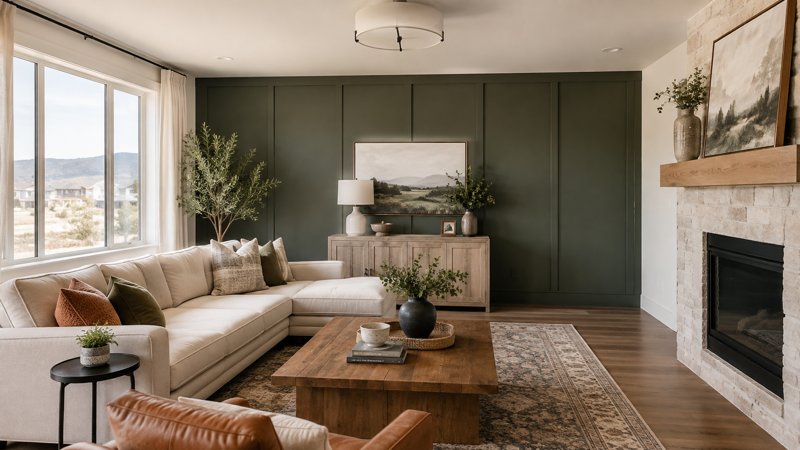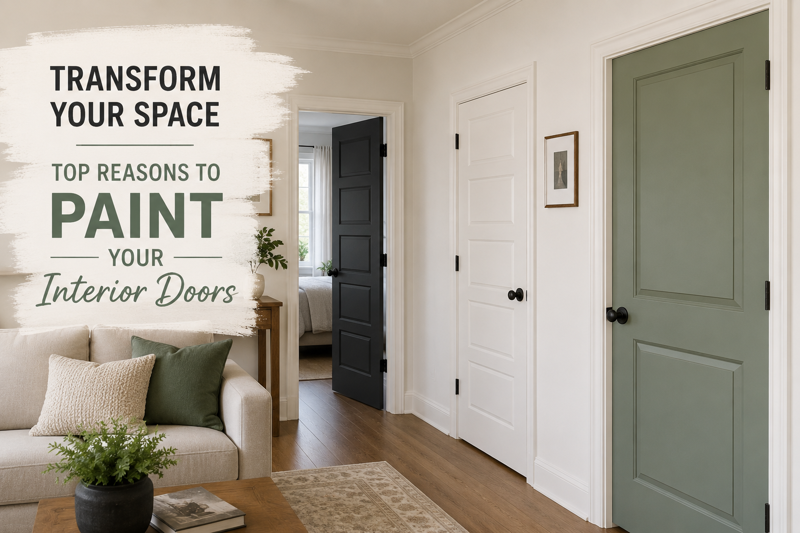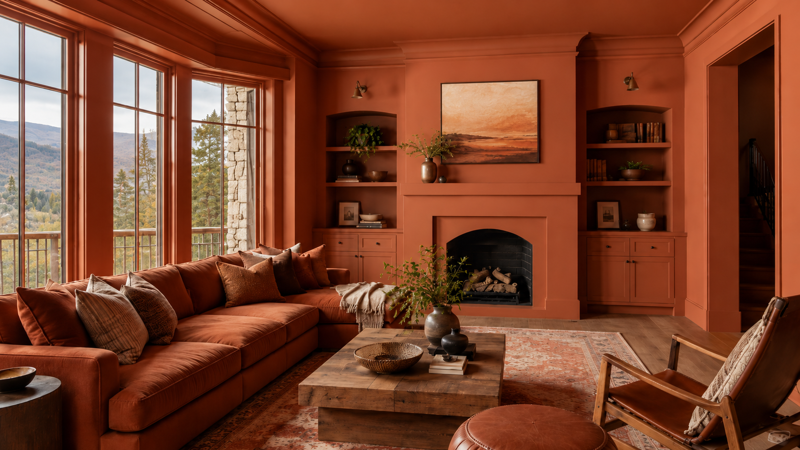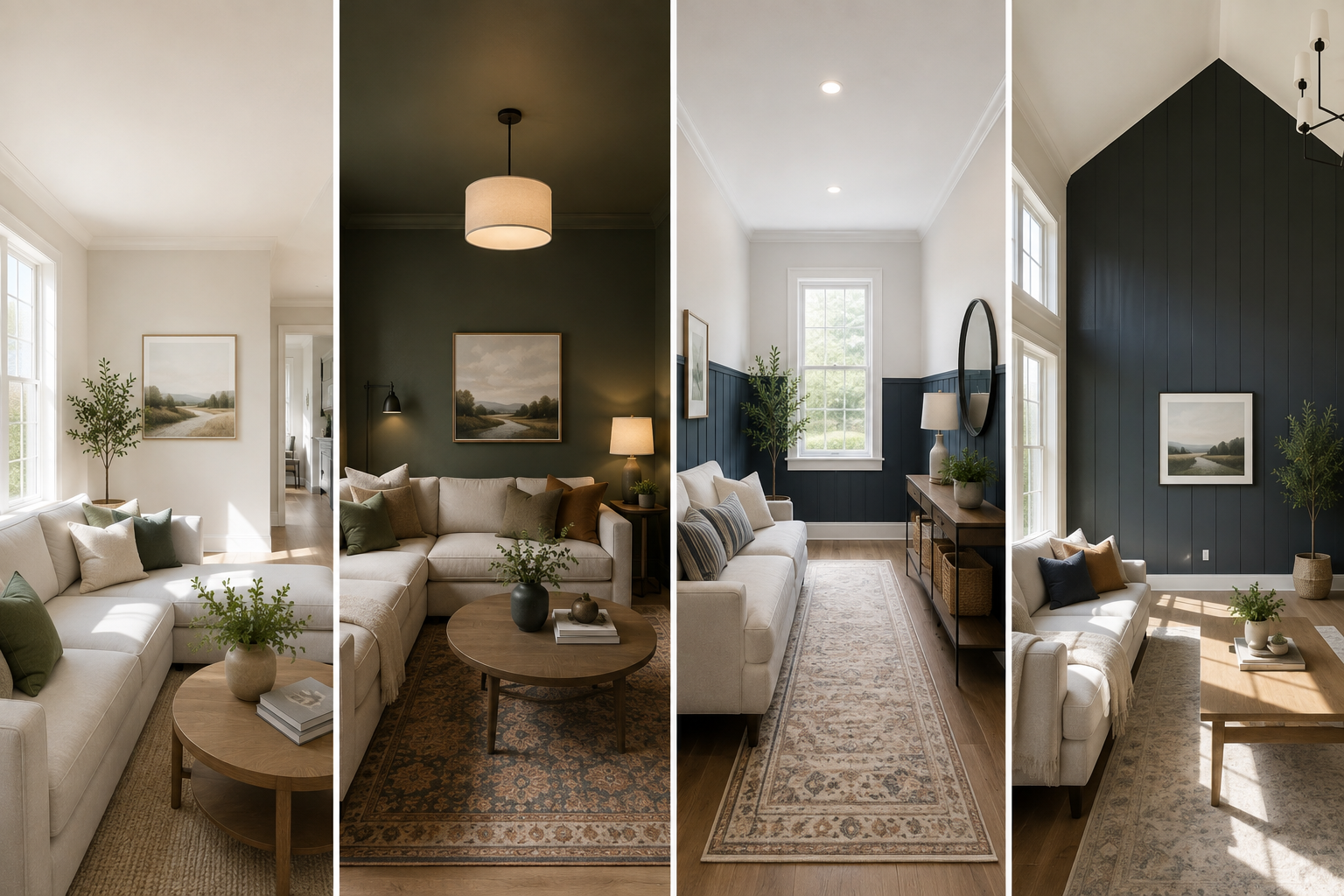
Paint is the cheapest way to change the shape of a room. Not the actual dimensions — the shape you perceive, which is the one you live with. The examples below all use the same room, the same furniture and the same style. The only thing that changes is where the color goes.
These are optical effects, and they work on a rule you can apply anywhere: dark surfaces advance, light surfaces recede. A dark wall reads as closer than it is. A light wall reads as further away. Your eye judges depth partly by how much light comes back off a surface, so cutting that light pulls the surface toward you.
Two other levers come with it. Value contrast — the gap in lightness between two surfaces — controls how hard the eye stops at the join. Paint a wall and its ceiling the same value and the corner between them dissolves, which makes both feel bigger. Paint them far apart in value and that corner becomes an edge the eye reads as a boundary. And horizontal or vertical divisions reset proportion: a color break partway up a wall tells the eye the wall ends there.
None of this needs a bold color. Two whites a few steps apart in depth will do it. The effect comes from placement and value, not saturation.
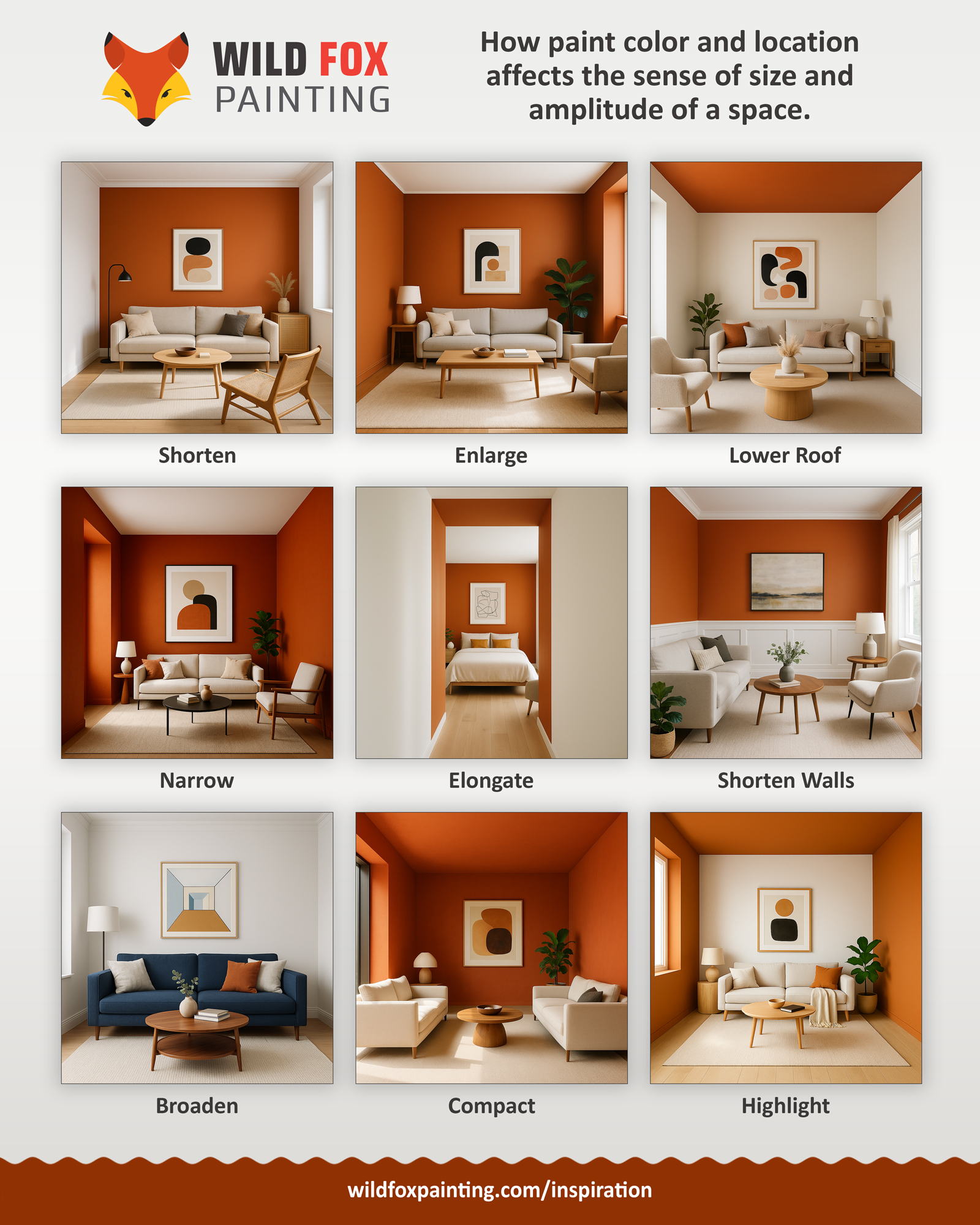
Shorten – Painting the ceiling a darker color than the walls makes the room feel shorter in depth, pulling the back wall closer visually.
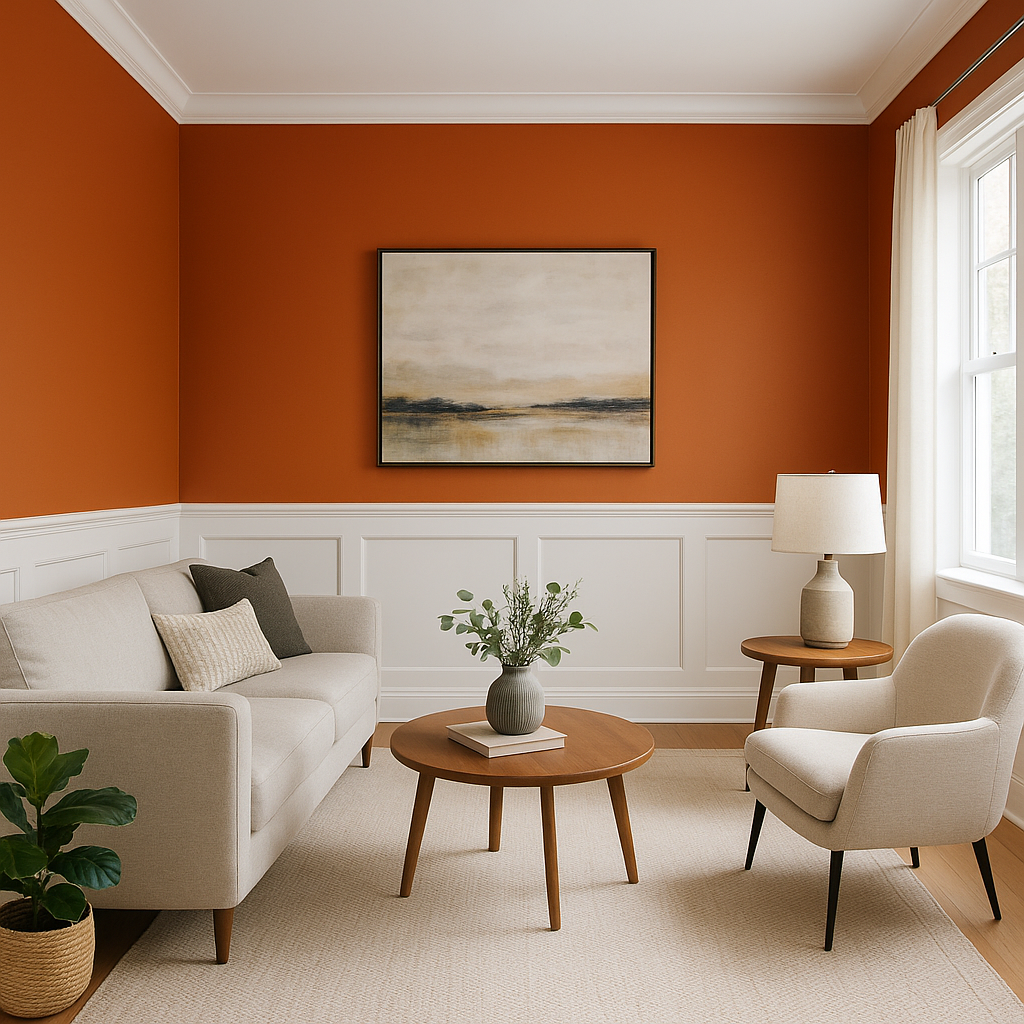
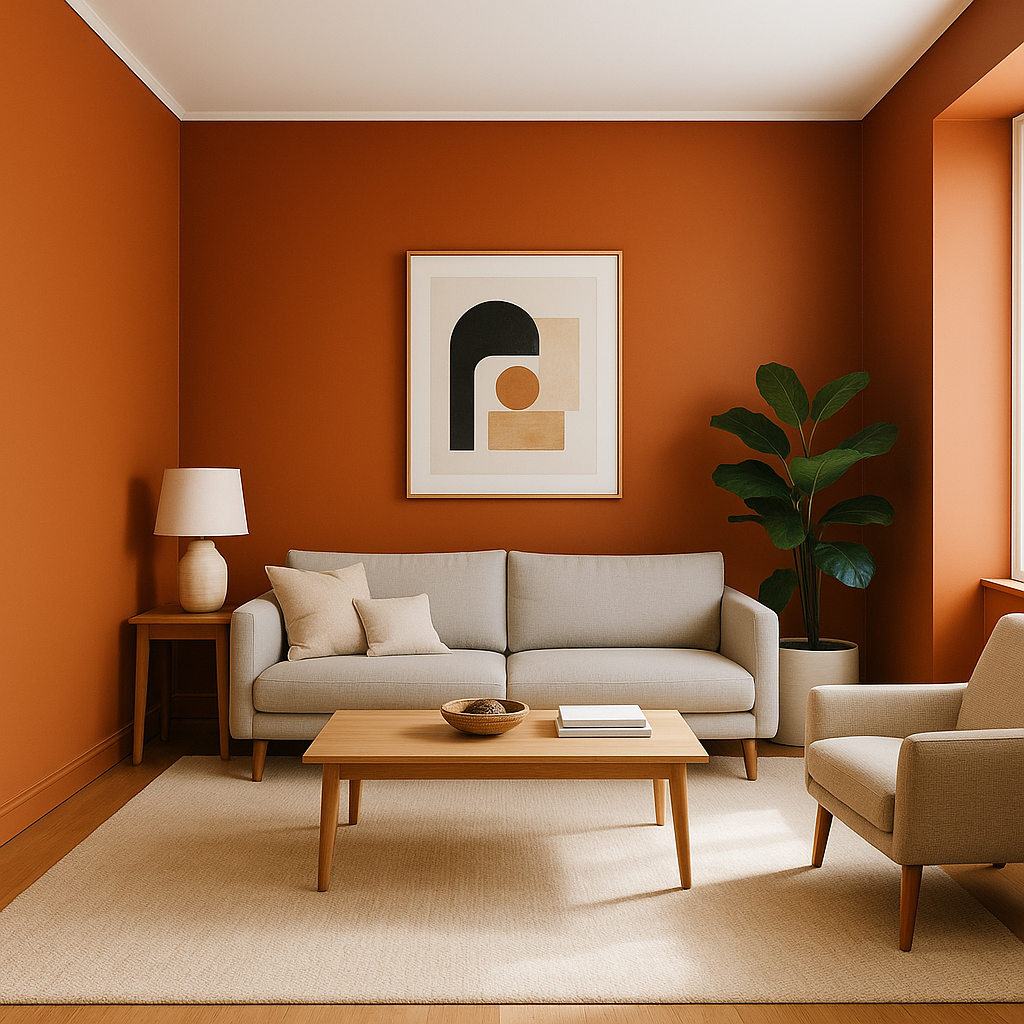
Enlarge – Using a darker color on the side walls and ceiling, but leaving the back wall lighter, pushes the back wall away and makes the space feel deeper and more expansive.
Lower Roof – Painting only the ceiling a darker color makes the ceiling feel physically lower, creating a cozier but less open space.
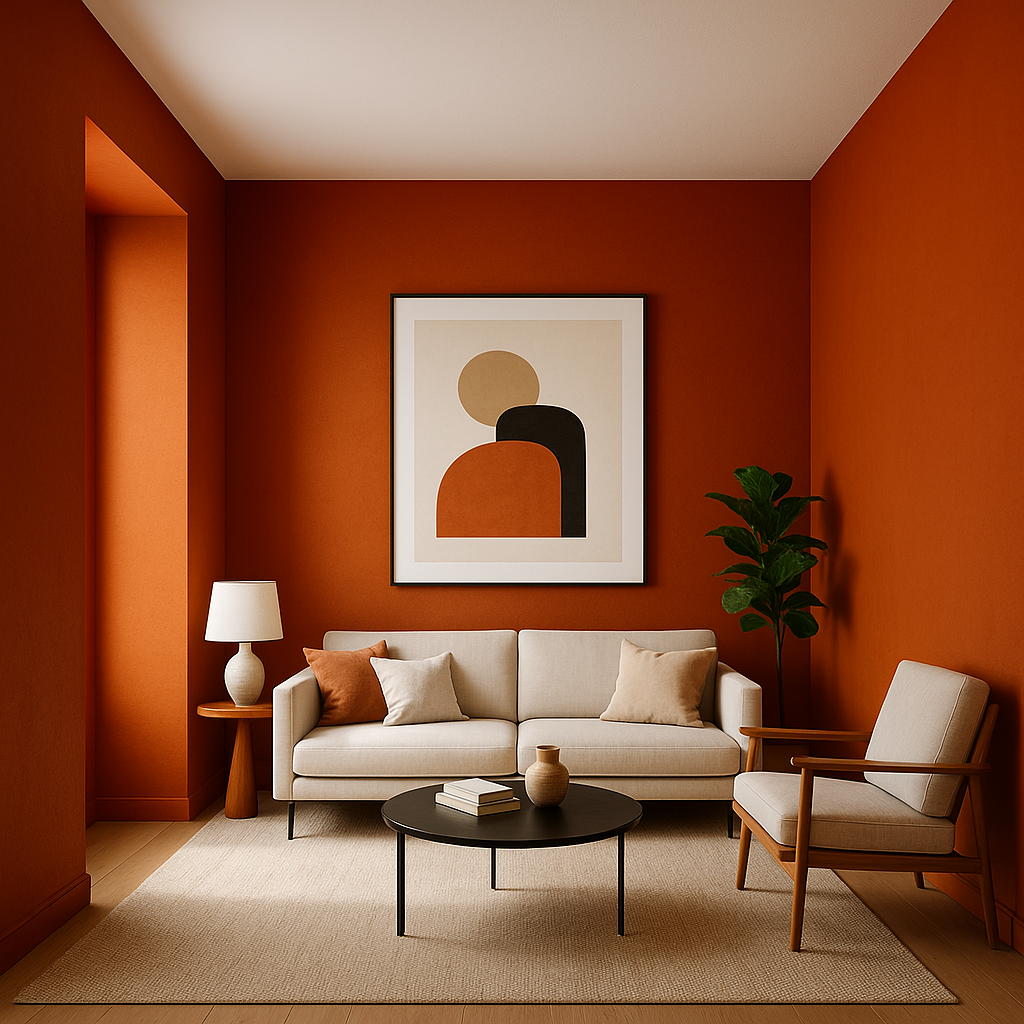
Narrow – Painting the two side walls in color while keeping the back wall light makes the room feel tighter and narrower.
Elongate – Painting all walls the same light color minimizes visual breaks, making the room feel longer and more open.
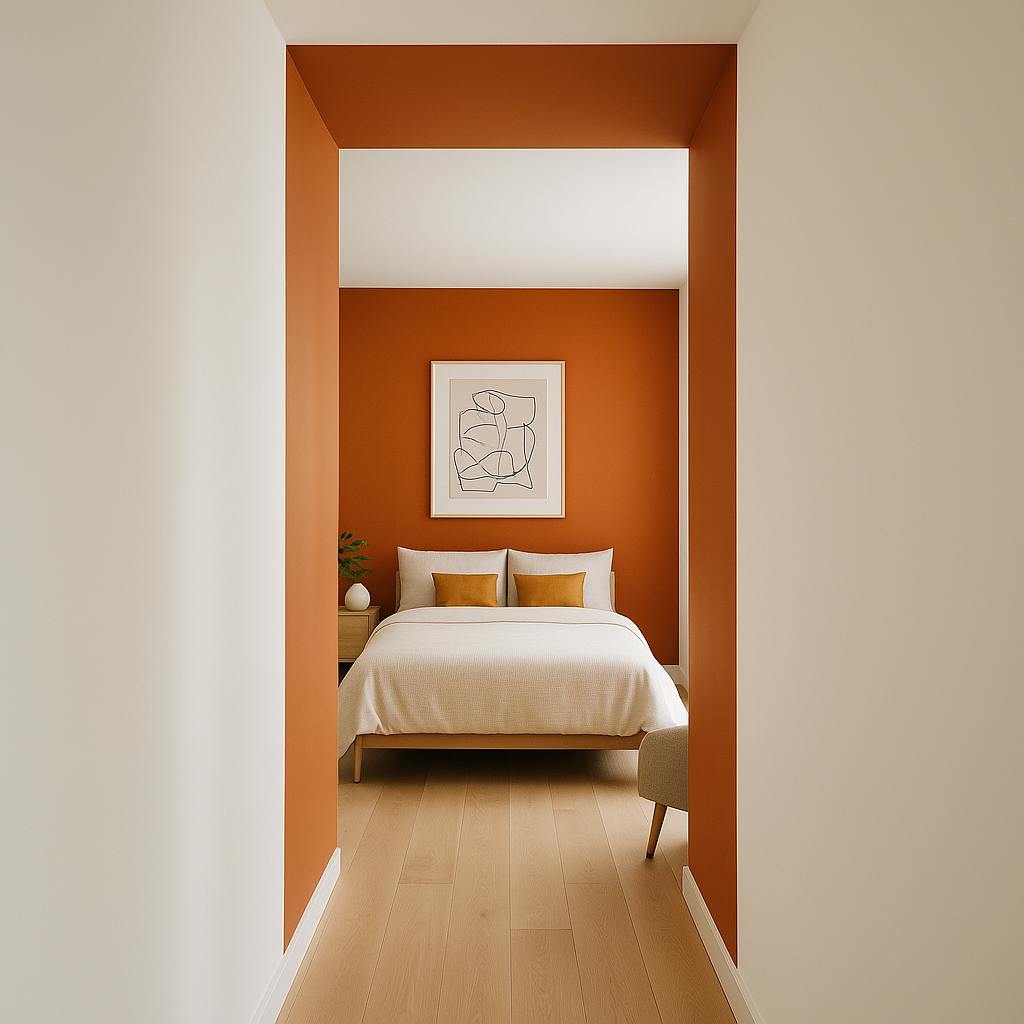
Shorten Walls – Painting only the bottom portion of the walls a darker color cuts the wall height visually, making them feel shorter.
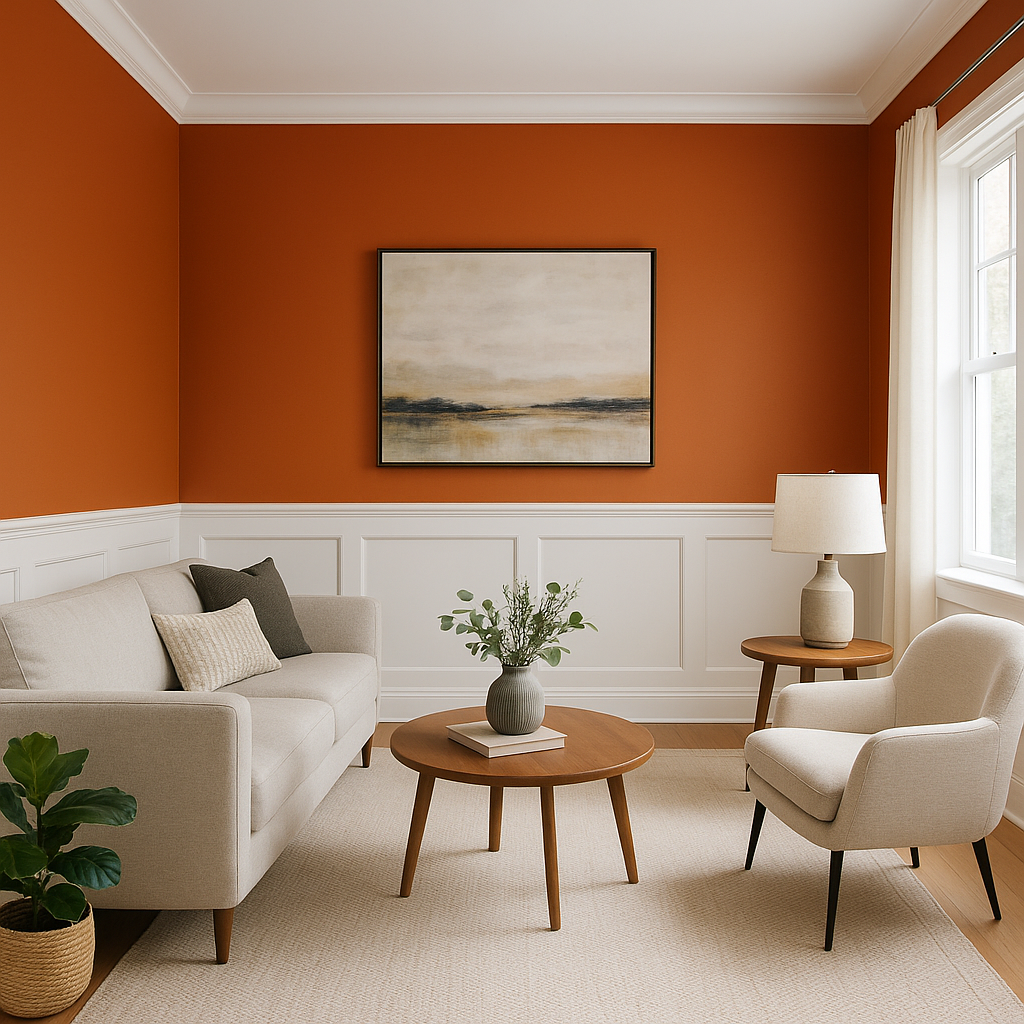
Broaden – Painting just the back wall a darker color while keeping side walls light makes the room feel wider.
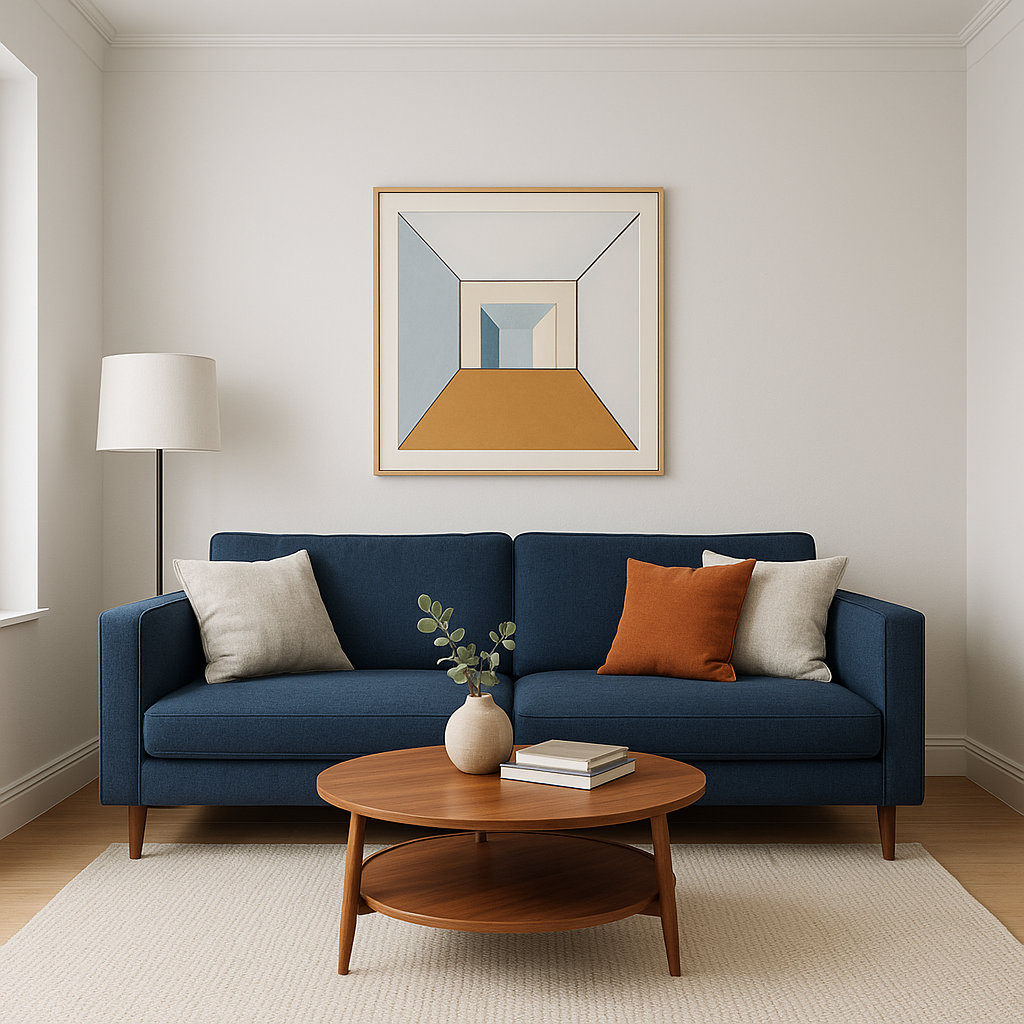
Compact – Using a darker color on all three walls and ceiling reduces visual space, making the room feel smaller and more enclosed.
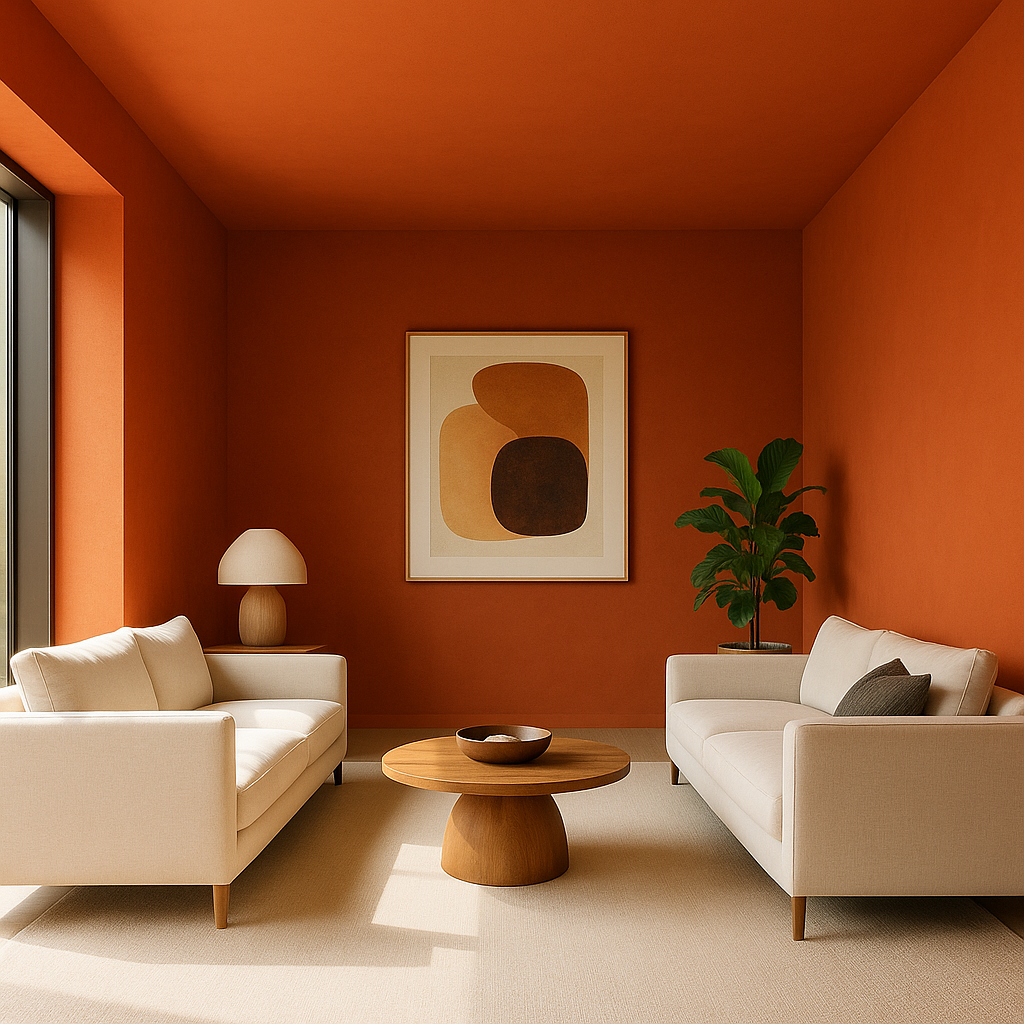
Highlight – Using contrasting colors on the side walls and back wall draws the eye to the back wall, creating a focal point and guiding where attention lands.

Matching the effect to the room you actually have
The diagrams are the theory. Here is where each one earns its keep in the homes we paint most often.
A finished basement with a low ceiling. Do not paint the ceiling darker — that is the Lower Roof effect, and it will make eight feet feel like seven. Run the ceiling in the same light color as the walls, or a half-step lighter, so the corner disappears and the eye stops registering where the wall ends. Basements also get less daylight, so start lighter than you think you need.
A long, narrow hallway. Broaden is the one you want: the far end wall a shade or two deeper, the two long side walls light. The dark end wall reads as closer, which shortens the tunnel and widens what is left. Doing the opposite — color on the long walls — is the Narrow effect, and it turns a corridor into a tighter corridor.
A small bedroom you want to feel bigger. Elongate. One light color on every wall, minimal breaks, and trim kept close in value to the walls rather than bright white against a mid-tone. Hard trim contrast draws a box around every wall, and each box reads as its own small surface.
A great room that feels cavernous. This is the rare case for going darker on purpose. Compact, or a gentler Lower Roof, gives a two-storey room a ceiling the eye can find, and the space stops feeling like a hotel lobby.
A room with one thing worth looking at — a fireplace, a bed wall, a window with a view. Highlight puts the deepest value behind it and lets everything else recede.
Sheen changes the effect as much as color does
Two walls in the same color and different sheens are not the same wall. Sheen controls how much light bounces back, and bounced light is exactly what your eye uses to judge distance.
A matte finish absorbs light and holds a color's depth, which is why it flatters a dark accent wall and why it hides a wall that is not perfectly flat. Move up through eggshell and satin and the surface starts returning light, lifting the color a step and picking out every roll and ridge along with it. Semi-gloss returns the most — it is the highest sheen we apply — which makes it right for trim and doors, where you want the edge to catch light and separate from the wall, and wrong for a large wall you were hoping to visually push away.
The practical version: if you are using a dark color to pull a surface closer, keep it flat. If you are using light to push a surface back, sheen works against you on a big wall and for you on the trim.
Test it before you commit
Placement effects are strongest in the corners and along the joins — precisely the places a small sample square tells you nothing about. Two things are worth doing before anyone opens a can.
Look at the color on the actual wall, at the time of day you actually use the room. Colorado light is bright and swings a long way between a south-facing living room at noon and a north-facing bedroom in the afternoon, and a color that reads warm in one will read grey in the other. Painting all four walls one color and then finding it only works on two of them is the usual way this goes wrong.
Sample the pair, not the color. These effects live in the relationship between two surfaces, so a wall color tested on its own cannot tell you whether the contrast with the ceiling will dissolve the corner or draw a line across it.
Our color inspiration gallery is the fastest way to see real colors in real rooms rather than as chips, and every color links through to a full page with its details.
If you would rather talk it through with someone who paints these rooms for a living, we are glad to walk the space with you and say plainly which of these effects your room is already doing to you — and which one it actually wants.