Kitchen cabinets take a beating. Years of steam, grease, sticky fingers, and sunlight eventually leave even well-made cabinets looking dull, dingy, or just plain outdated. At that point, most homeowners face the same fork in the road: pay to have them repainted, or tear them out and start over?
Both options are legitimate. But they're not equally suited to every situation, and the gap in cost and disruption between them is significant enough that it's worth slowing down before you decide.
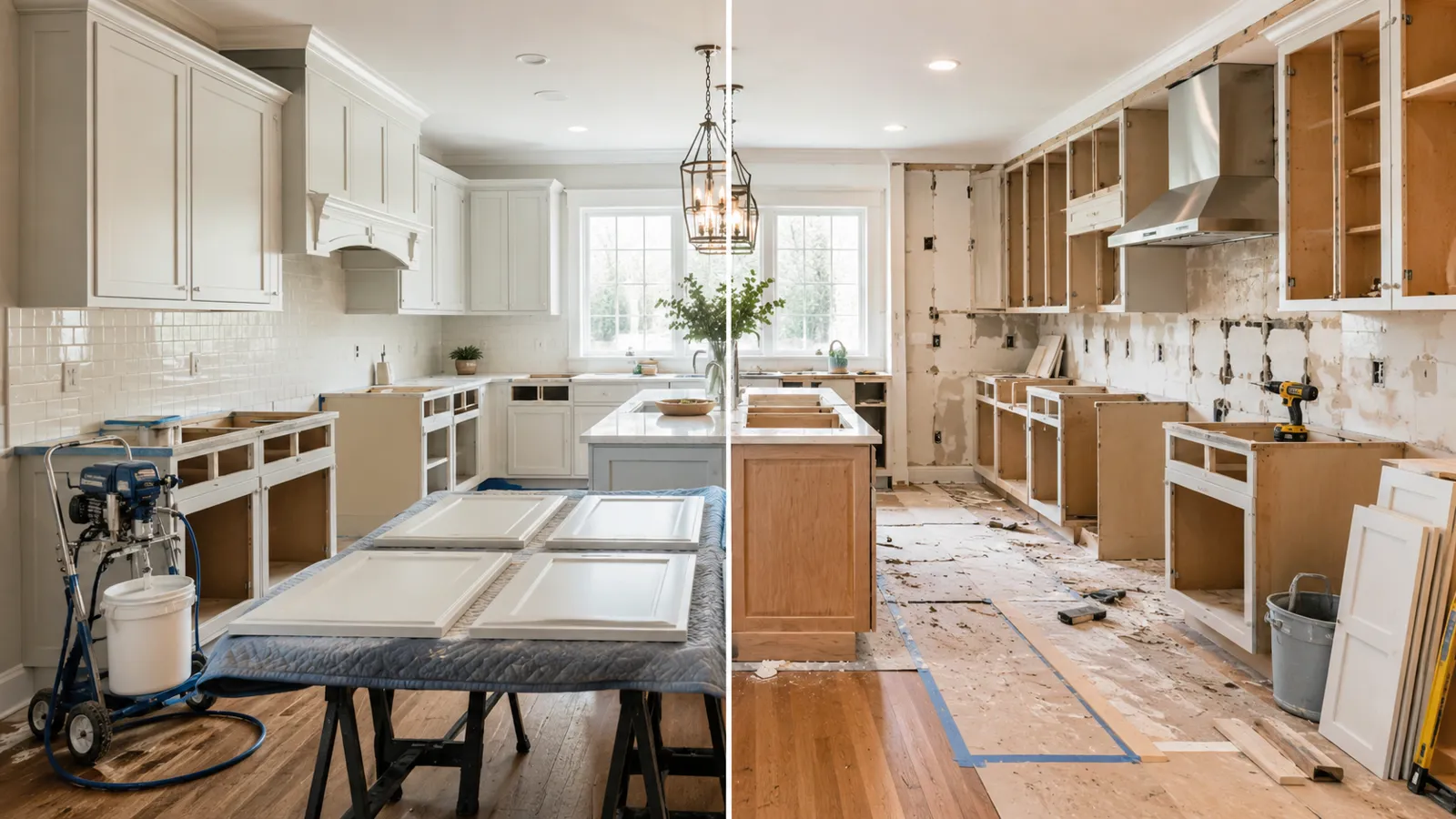
What Replacement Actually Costs — and Demands
Full cabinet replacement runs $15,000 to $40,000 or more for a typical kitchen, depending on box quality, door style, hardware, and installation labor. That figure doesn't always include countertop adjustments, plumbing disconnects, or the incidental drywall patching that comes with ripping out old cabinets.
Beyond money, replacement means your kitchen is functionally unusable for one to three weeks. Contractors are in and out. Dust gets into everything. You're eating takeout and washing dishes in the bathroom sink. For families with kids or anyone working from home, that disruption is real.
Replacement also doesn't guarantee better results if the new cabinets are builder-grade boxes with a sprayed lacquer finish. In five to seven years, you may be having this same conversation again.
That said, replacement makes clear sense in a few situations:
- Box structure is failing. If the cabinet frames are warped, water-damaged, or the joints are separating, paint won't fix the underlying problem.
- Layout no longer works. Painting preserves what's there. If you need more storage, different dimensions, or a completely reconfigured kitchen, replacement is the only path.
- Door and drawer fronts are delaminating or crumbling. Thermofoil that's peeling away from MDF, or particleboard that's swelling from moisture, isn't a good candidate for paint adhesion.
If none of those conditions apply — meaning your boxes are solid, your layout works, and you just hate how the cabinets look — then painting deserves a serious look.
What Painting Actually Delivers
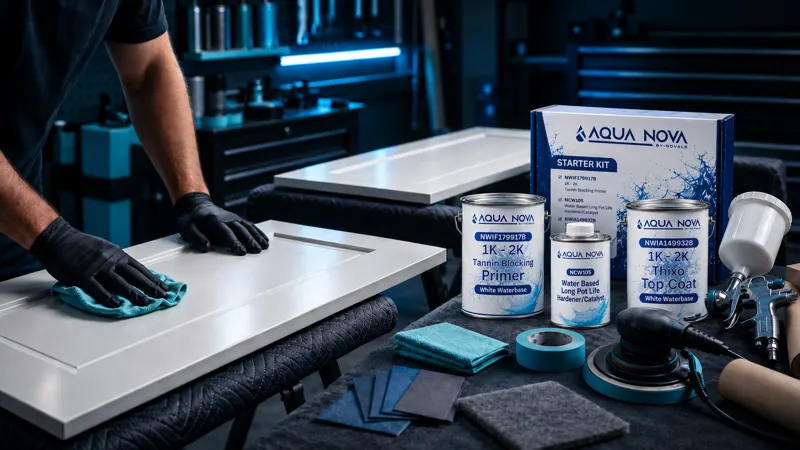
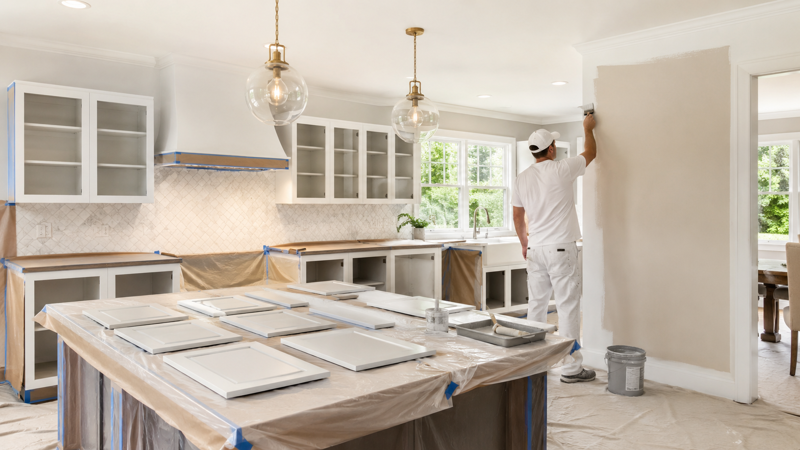
A professional cabinet paint job isn't rolling on a coat of wall paint and calling it done. Done right, it involves removing every door and drawer front, cleaning and degreasing all surfaces, sanding or chemically abrading the existing finish, applying a bonding primer, and spraying the finish coats in a controlled environment rather than brushing them on in place.
The result is a hard, even finish with no brush marks — one that reads as factory-made rather than DIY.
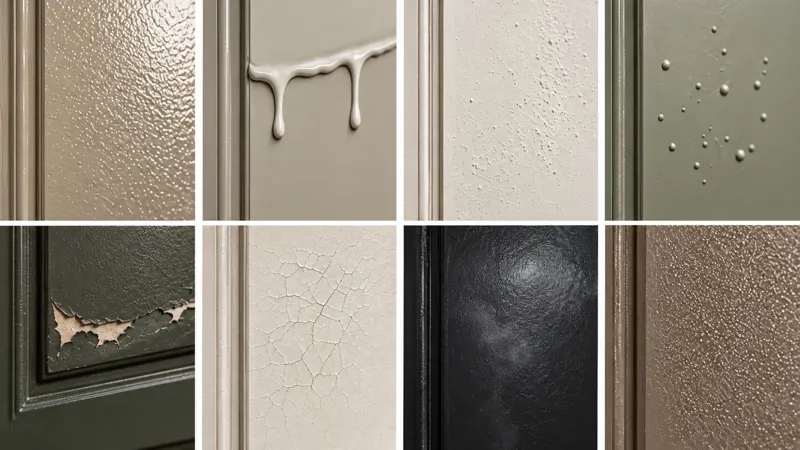
The finish product matters a great deal here. Quality cabinet coatings are formulated specifically for high-traffic surfaces: they cure harder than standard wall paint, resist moisture and grease, and hold up to repeated cleaning without burnishing or wearing through at the edges. Using the right product for the substrate — wood, MDF, or previously finished surfaces — is what separates a paint job that looks good at six months from one that still looks good at six years.
Professional cabinet painting costs a fraction of replacement — a meaningful fraction, not a rounding error. That gap is real money that stays in your pocket or goes toward something else in the kitchen remodel.
The Honest Comparison
| Factor | Replacement | Professional Painting |
|---|---|---|
| Cost | $15,000–$40,000+ | Fraction of replacement |
| Kitchen downtime | 1–3 weeks | Several days (doors off-site) |
| Structural problems fixed | Yes | No |
| Layout changes possible | Yes | No |
| Finish quality | Varies by cabinet grade | Spray-applied, factory-style |
| Color flexibility | Limited to catalog | Nearly unlimited |
| Best for | Failing boxes, layout changes | Solid boxes, cosmetic refresh |
How to Know Which Category You're In
Open a cabinet door and look at the hinge area and the inside corners of the box. Press on the floor of the cabinet. If the wood feels solid and the joints are tight, the boxes are almost certainly good candidates for painting.
Look at the door fronts themselves. Solid wood or MDF with a painted or stained finish is paintable. Thermofoil (a plastic wrap over MDF) that's still fully adhered can sometimes be painted with the right prep, but if it's peeling, the adhesion window has closed.
If you're genuinely unsure, ask a painter who specializes in cabinets to take a look before you make any decisions. A straightforward assessment costs you nothing and gives you real information.
What to Ask a Painting Contractor Before You Hire
Not all cabinet painting is equal. Before signing anything, ask:
- Are doors sprayed off-site or brushed in place? Off-site spraying produces a dramatically better finish.
- What primer do you use, and why? A bonding primer appropriate for the existing surface is non-negotiable.
- What's the finish product? It should be a coating formulated for cabinetry, not interior wall paint.
- Do you do the work yourselves, or is it subcontracted? Know who's actually in your house.
- What does the warranty cover and for how long? A contractor confident in their process will stand behind the result.
These questions separate contractors who understand cabinet finishing from those who don't — and the answers matter more than the price.
The Bottom Line
For most homeowners with solid cabinet boxes and a working kitchen layout, professional painting is the rational choice. You get a finish that looks current, holds up to daily use, and costs a fraction of what replacement demands — without gutting your kitchen for weeks.
Replacement is the right answer when the structure is failing or the layout needs to change. In every other case, it's a very expensive way to solve a cosmetic problem.
If your cabinets fall into the paintable category and you're in Douglas County or the surrounding area, take a look at what a professional cabinet paint job involves — then get a real number for your kitchen. There's no obligation, and knowing the actual cost makes the decision much easier.
Learn more about our cabinet painting process, or explore color options before your estimate conversation. Ready to get a number? Request your free estimate and we'll take a look at what you're working with.