The color you picked at the paint store is not the color you'll get on the wall in Castle Rock. That's not a sales line, it's physics. At 6,200 feet the light is stronger and bluer than at sea level, most homes here were built with big windows and open plans to take advantage of it, and the same swatch reads three different ways in a south-facing great room, a north-facing bedroom and a hallway with no window at all. Smart interior painting in Castle Rock starts with the light, then the finish, then the color. Here's how we walk homeowners through it.
Start with the light, not the swatch
Castle Rock gets more than 240 sunny days a year, and the sun comes in low and hard from the south and west in the afternoon. That does two things to interior paint. It washes out delicate colors, so a pale blue-gray that looked calm on the chip can go nearly white by 3 p.m. And it warms everything, so a neutral with a hint of pink or yellow in it shows that hint plainly in a sunlit room.
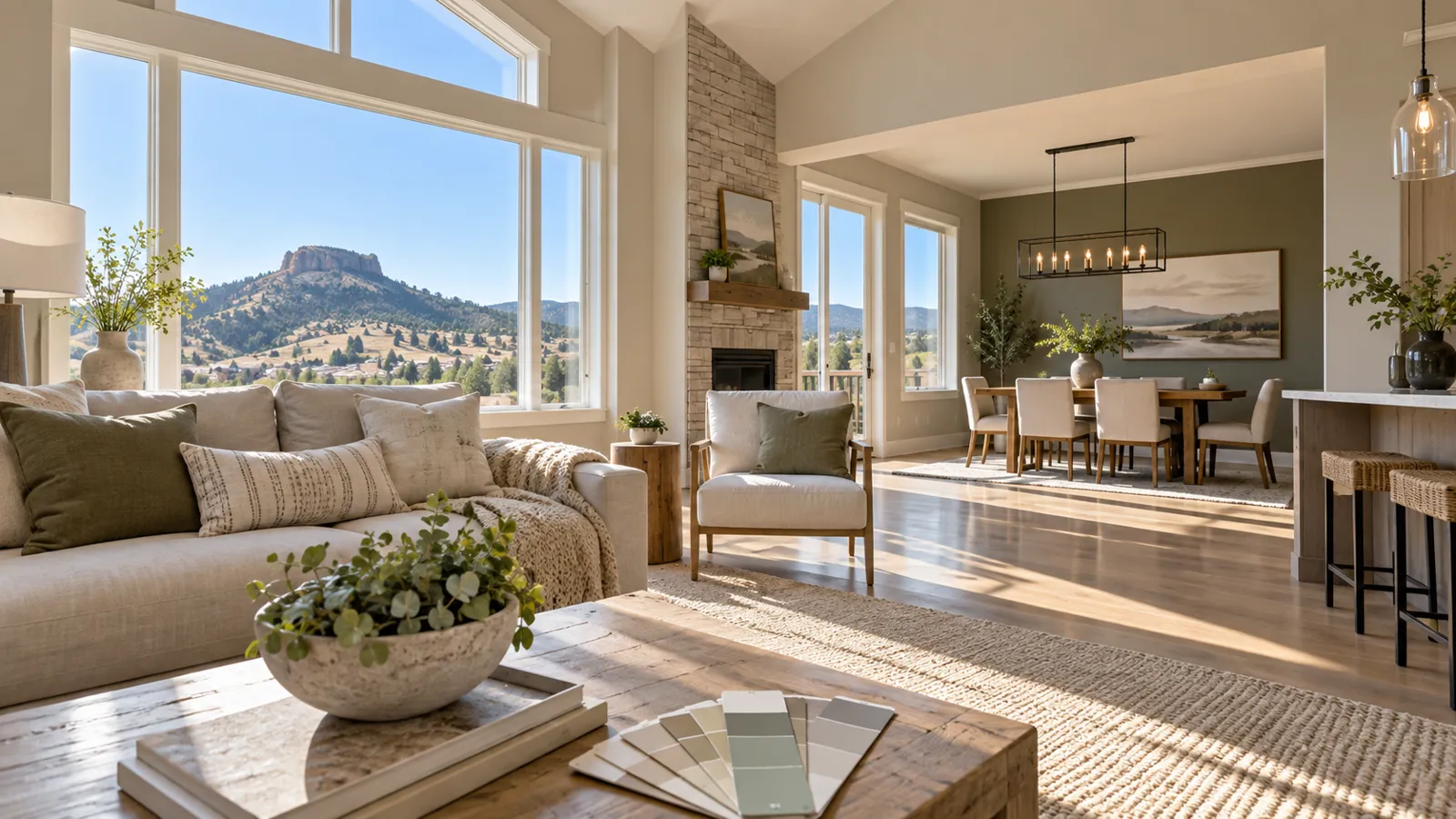
The newer homes across The Meadows, Crystal Valley and Terrain were built to let that light in: two-story entries, vaulted great rooms, walls of windows facing the view. The older Founders Village and Plum Creek homes have more conventional rooms and more walls without direct sun. Both need the same first step, which is looking at the color in the room it's going in, at the time of day you actually use that room.
South- and west-facing rooms
These get warm, direct light most of the day. Warm whites and warm neutrals hold up; cool grays can look flat and lifeless; anything with a yellow undertone gets amplified. Slightly cooler or grayer versions of a color often read as the color you wanted.
North-facing rooms
Cooler, indirect, steady light. Colors read truer but dimmer, and cool colors go cold. A warm white or a neutral with a touch of warmth keeps a north bedroom from feeling like a waiting room.
Rooms without windows
Hallways, powder rooms, closets, the stairwell. Here the color is whatever your light bulbs make it. Check the bulb temperature before you pick the paint, or you'll be matching to a swatch the room will never show.
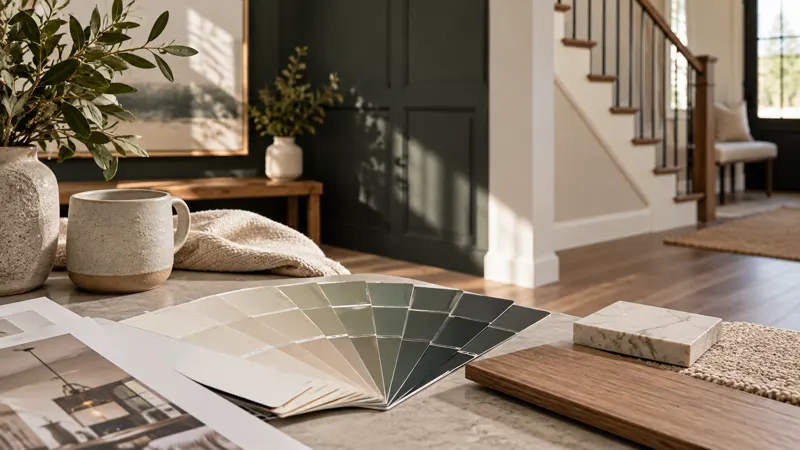
We bring fan decks to the estimate and put test colors on the wall before ordering paint. It's a small step that saves a full repaint.
Pick the finish for the room, not the whole house
Sheen changes how a color looks and how a wall wears. Higher sheen reflects more light, which brightens a room but also shows every roller mark and drywall seam, and in Castle Rock's raking afternoon light that's a real consideration on big walls.
| Finish | Sheen | Where it belongs | Why |
|---|---|---|---|
| Matte (flat) | None | Ceilings, great-room walls, bedrooms, any large wall in strong light | Hides texture and seams; reads flat and even under afternoon sun |
| Eggshell | Low | Living and dining rooms, hallways in lower light | A little more washable than matte with almost no shine |
| Satin | Medium | Kitchens, bathrooms, kids' rooms, mudrooms, stairwells | Scrubbable; handles humidity and handprints |
| Semi-gloss | Higher | Trim, doors, baseboards, cabinets | Cleanable, durable edge that defines the room |
That's the whole ladder we use. Semi-gloss is the highest sheen we apply; higher-gloss finishes show every flaw and belong on furniture, not walls. For most Castle Rock homes the answer is matte or satin on walls depending on the room's traffic, matte on ceilings, and semi-gloss on trim and doors.
One Castle Rock-specific note: a lot of the newer homes are still on the single coat of builder flat that went on before the walk-through. It scuffs, it shows roller marks, and it can't be wiped. Repainting in a proper matte or satin, two coats, is the difference between a wall you clean and a wall you repaint.
Colors that work in Castle Rock light
These are the directions we see homeowners happiest with, room by room. Every one of them should be tested on your wall first.
Living rooms and great rooms
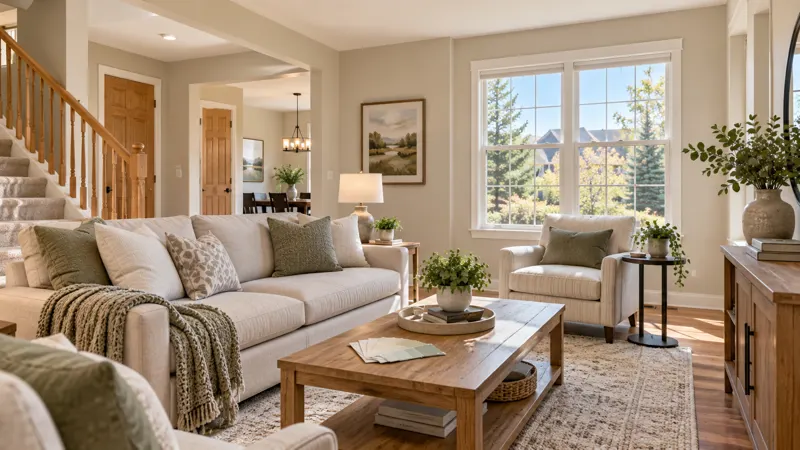
Warm whites and soft greiges. They take the afternoon sun without going yellow, they look calm in the evening, and they go with wood floors, stone fireplaces and the earth tones outside the windows. Sherwin-Williams Alabaster and Benjamin Moore Revere Pewter are the two we're asked for most, and both hold up in a vaulted room.
Bedrooms
Muted blues and sage greens. They read restful, they're the colors that most benefit from a north-facing room's steady light, and they don't fight the view. Sherwin-Williams Sea Salt and Benjamin Moore Quiet Moments are reliable starting points; in a south-facing bedroom go a shade deeper than you think, because the sun will lift it.
Kitchens
Creamy whites, taupes and dusty greens. Kitchens here get a lot of sun and a lot of use, so the color has to be bright without glare and the finish has to scrub. Sherwin-Williams Creamy and Benjamin Moore Camouflage are good examples; pair them with a satin on the walls and a semi-gloss on the trim.
Accent walls and color drenches
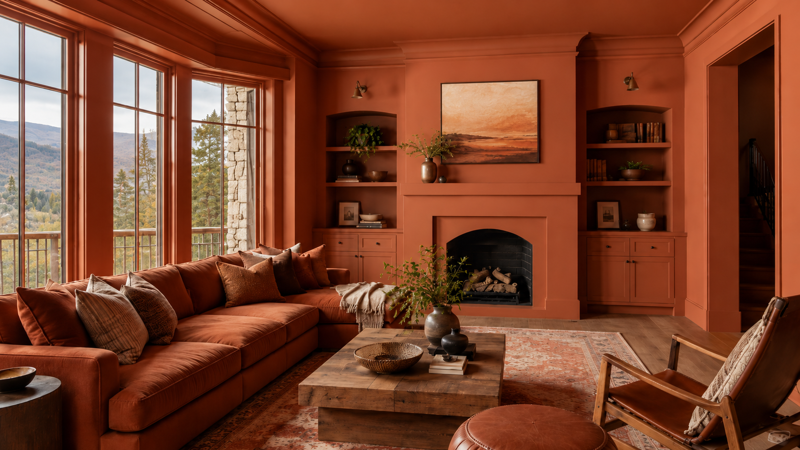
Navy, charcoal and terracotta give a big open room a place to rest the eye. Sherwin-Williams Naval, Benjamin Moore Kendall Charcoal and Sherwin-Williams Cavern Clay all work here, in a dining room, an office, or the wall behind the bed. A color-drenched room, where walls, trim and ceiling all go the same deep tone, is the current version of the accent wall and works especially well in a powder room or study.
Our Color Studio has every color from Sherwin-Williams, Benjamin Moore, Behr and Valspar with room previews, and you can save favorites and build a whole-home palette before we meet. It's the fastest way to narrow 11,000 colors to the three worth testing on the wall.
Making an open floor plan flow
Most Castle Rock homes built since 2000 are open plans, and the mistake is treating the kitchen, dining and living areas as three rooms with three colors. They're one room with three zones.
- Start with one neutral base for the main connected space, chosen for the direction most of the windows face.
- Keep undertones consistent. A warm white in the living area and a cool white in the kitchen will look like a mistake where they meet.
- Use trim and ceilings to tie it together. The same crisp white in semi-gloss on every piece of trim, and the same flat white or a lighter version of the wall color on the ceilings.
- Add contrast, not conflict. A deeper shade of the main color on the dining wall or the fireplace wall defines the zone without breaking the flow.
Low-odor, low-VOC paint in a house you're living in
Nearly every interior job we do is in an occupied home, and Castle Rock's dry, tight, newer houses hold odor. The premium lines we use from Sherwin-Williams and Benjamin Moore are low- or zero-VOC, which means most rooms are usable the same evening and the smell is gone in a day. If someone in the house is sensitive, tell us at the estimate and we'll spec the lowest-odor product for the job.
What a professional adds
Anyone can roll a wall. What you're paying for is the prep and the finish: patching and sanding so the seams don't show in afternoon light, priming the repairs so they don't flash through the color, cutting a clean line against the ceiling and trim, and two coats that actually build the film. On Castle Rock's two-story entries and vaulted great rooms it's also the staging, done safely, that most homeowners don't own the equipment for.
We're based in Littleton and Castle Rock is where our crews spend more time than anywhere else. We bring the fan decks, put the test colors up, name the products in a written estimate, and keep the house livable while we work. When the last wall is done we walk every surface with you and touch up on the spot.
Frequently asked questions
What's the best paint finish for walls in Castle Rock? Matte on big, sunlit walls and ceilings, satin in kitchens, bathrooms and high-traffic rooms. Semi-gloss on trim and doors. We don't go glossier than that on a house interior.
Why does my paint color look different than the sample? Light. A chip in a store under fluorescent light and a wall in a south-facing Castle Rock room at 3 p.m. are different environments. Test the color on the wall, in that room, at the time you use it.
Do you help pick colors? Yes. We bring fan decks to the estimate, put test colors up on request, and the Color Studio on our site lets you browse, save and build a palette before we meet.
Is it too early to repaint a newer home? No. Builder paint is a single flat coat meant to get through the walk-through. Repainting in the colors you want, two coats, is one of the most common first projects we do in The Meadows and Crystal Valley.
How long does an interior repaint take? A single room is usually one to two days; a whole floor or whole interior runs four to five days depending on prep and ceiling heights. You'll get a specific timeline in the written estimate.
Do you use low-VOC paint? Yes. The Sherwin-Williams and Benjamin Moore lines we use inside are low- or zero-VOC, and we'll pick the lowest-odor option if anyone in the house is sensitive.
Ready to see the right color in the right light?
If your Castle Rock walls are still builder beige, scuffed at every doorway, or just a color that never looked the way the chip promised, we can fix it. Request a free estimate and we'll bring the fan decks, look at the rooms in their own light, and put a written plan together with the finish and product named for every surface.