Castle Rock is one of those places where the geography does more to your paint than most homeowners expect. You've got high-altitude UV, dry winters that crack caulk, and wind that pushes grit against siding in ways that a painter in, say, Denver proper doesn't deal with as often. We work here regularly, and after a while the neighborhoods start to tell their own stories.
The Meadows: High-Traffic Interiors, Fast-Worn Walls
The Meadows draws a lot of families, which means the interiors take a beating. Mudrooms, hallways, kids' rooms, stair railings — these surfaces see daily contact and need paint that can handle scrubbing without dulling out after a few months.
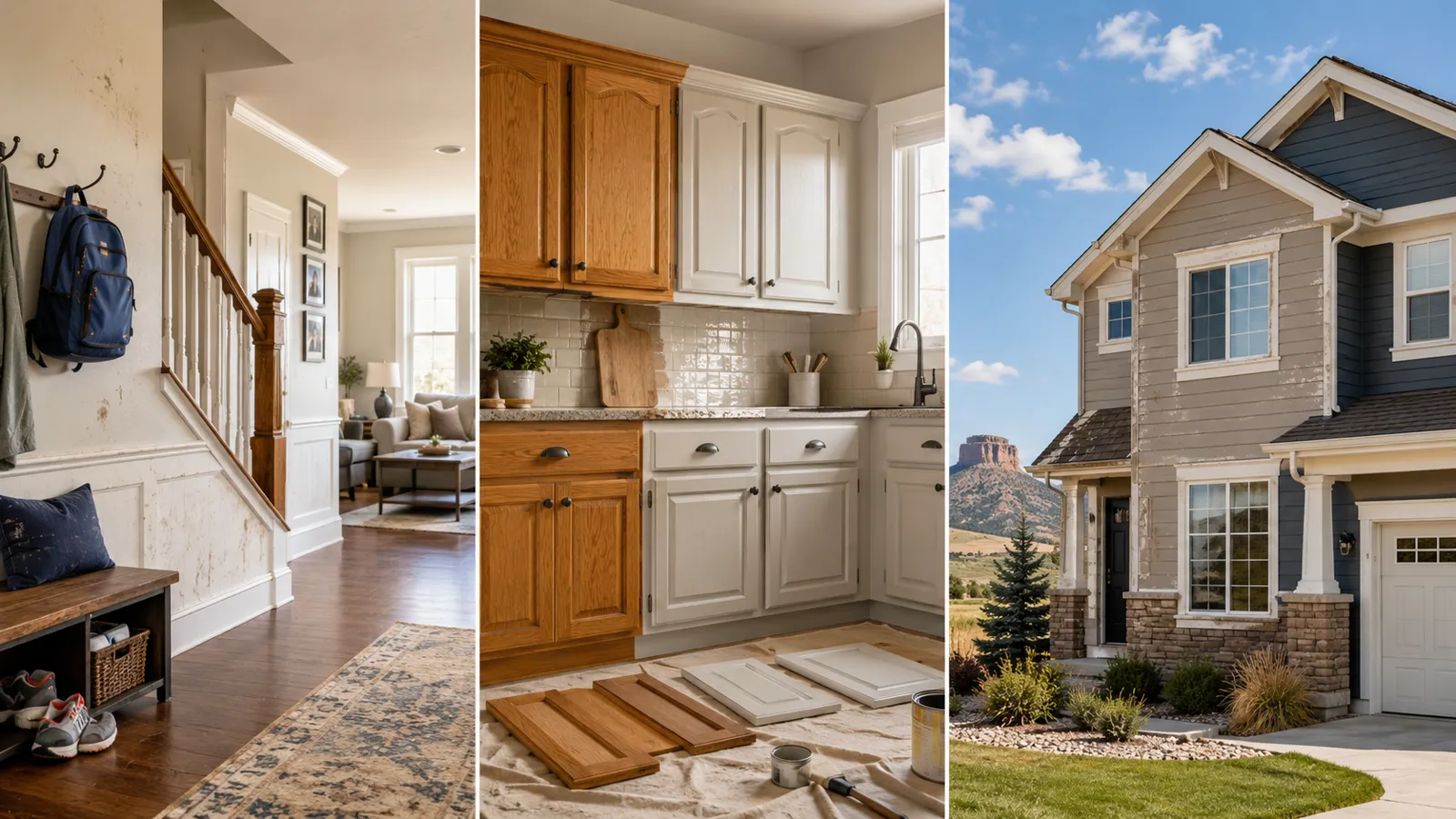
The before-state we see most often in Meadows homes: flat or low-sheen paint on walls that were clearly chosen at move-in and never revisited. They look fine from across the room, but up close there are scuff trails, faded patches near light switches, and cleaned spots that left a ghost ring. The paint wasn't wrong for a quiet space — it was just wrong for the life being lived there.
The fix isn't complicated, but the reasoning matters. Moving to an eggshell sheen on main-level walls gives you a surface you can actually wipe down. The slight sheen deflects light rather than absorbing it, so marks don't embed the same way. Proper prep — cleaning, light sanding any glossy trim, priming repaired areas — is what makes the new coat look consistent instead of patchy six months later.
Why it holds: the sheen choice matched the use. Paint is a system, not just a color.
Crystal Valley & Plum Creek: Cabinets That Were Never Meant to Last
Some of the older homes along the Plum Creek corridor have original builder cabinets that are structurally fine but cosmetically tired — dated oak grain, thick factory finish starting to chip at the door edges, hardware that's been updated once already. Replacing them would mean $15,000–$40,000 or more for a full kitchen cabinet replacement. A lot of homeowners don't realize painting is a serious alternative, not a temporary patch.
The before: orange-toned oak doors with a thick catalog finish, visible brush marks from a previous DIY attempt on the cabinet boxes, mis-matched interiors.
The process that makes it work is methodical. Doors come off and get painted separately so you get a flat, even surface without sags. Boxes get cleaned, deglossed, and primed with a product designed to bond to the existing finish — skipping that step is why DIY cabinet paint jobs fail. A finish coat goes on in thin passes, and doors go back on after full cure, not just dry to touch.
The after: a clean, consistent surface that reads as intentional — not painted-over. Color choice matters too, and it's worth spending real time on it before committing. Our color tools can help you work through options before a single can gets opened.
Why it holds: correct prep and cure time. Cabinet paint fails at the edges because people rush rehanging. Giving the finish time to fully harden before daily use is the difference between a paint job that lasts and one that chips by spring.
Founders Village: South-Facing Exteriors and UV Fade
Founders sits on terrain that catches a lot of direct afternoon sun, and south- and west-facing elevations in that neighborhood show it. Faded siding, chalky stucco, paint that's gone from a warm gray to something closer to beige — it's a common pattern.
UV degradation isn't just cosmetic. When paint breaks down, it loses its ability to keep moisture out. In Castle Rock's climate, you get freeze-thaw cycles that push water into any gap the degraded film created. The exterior fails from the outside in.
The before we often see: peeling paint at window trim, chalking on the south face, caulk that's pulled away from seams and gone brittle.
The right approach starts with pressure washing, not painting over the chalk. Chalk is pigment that's broken free from the binder — painting over it means your new coat is adhering to loose material, not the surface. After washing and drying, failed caulk gets scraped and replaced. Bare wood or stucco spots get primed before the finish coat goes on.
For south-facing surfaces specifically, product choice matters. Higher-quality exterior paints carry better UV inhibitors and maintain film integrity longer between repaint cycles. That's not marketing — it's measurable in accelerated weathering tests. The cost per square foot of a durable product is real, but so is the cost of repainting three years sooner than you needed to.
Why it holds: the prep removed the failure point. The product choice bought more time against the specific stress this elevation faces.
Why 'Nearby' Actually Matters
One thing that gets overlooked when hiring a painter: proximity affects more than scheduling. When we finish a job in Founders or The Meadows, we're not driving back to another county. If something needs attention — a scuff that happened during move-back, a touch-up spot that got missed — we're close enough that it doesn't feel like a production to come back.
That's not a small thing. A lot of painting complaints aren't about the paint itself; they're about not being able to get anyone back to address a minor issue once the invoice is paid.
If you're in Castle Rock and thinking about an interior refresh, exterior repaint, or cabinet project, the Castle Rock page has more on how we work in this area. For cabinets specifically, cabinet painting walks through the process in more detail.
The most useful first step is a free estimate — we'll look at the actual surfaces, talk through what's driving the wear, and give you a clear picture of what the work involves. Request your free estimate and we'll take it from there.