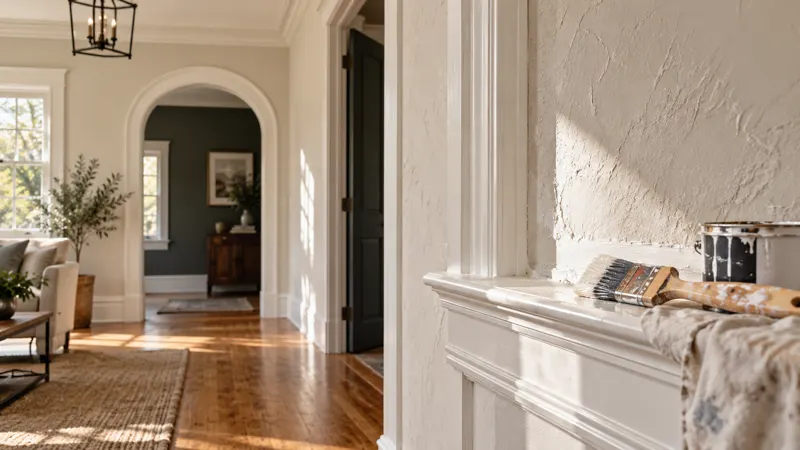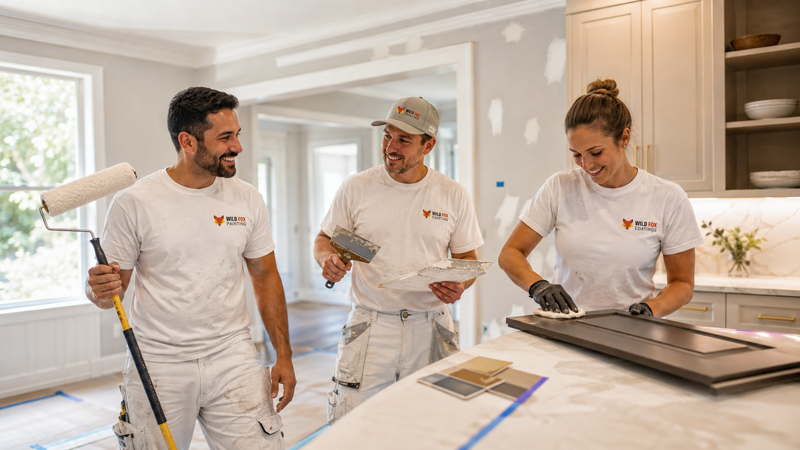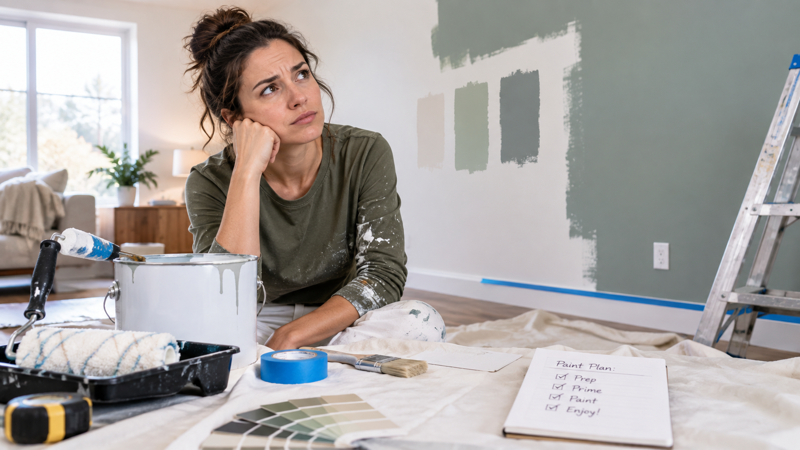
Most homeowners don't have a second home to retreat to during a repaint. They have kids, pets, work-from-home setups, and a kitchen they actually need to use. The good news: painting an occupied home is completely manageable when the painter plans for it. Here's how that actually works.
The Question We Hear Most
Before a single drop cloth hits the floor, the most common thing we hear is some version of: "Do we need to leave?"
For an interior repaint using low-VOC or zero-VOC paints — which is standard practice for occupied homes — the honest answer is no. These formulas off-gas at a fraction of the rate that older oil-based paints did. In most cases, rooms are safe to sleep in the same evening the paint goes up. That's not a marketing claim; it's the chemistry of water-based low-VOC latex doing its job.
The caveat: good ventilation still matters. We open windows when weather allows and encourage families to keep air moving through freshly painted rooms. Even low-VOC paint has a smell. It just isn't a hazard.
How a Typical Day Looks
Knowing what to expect each morning takes a lot of the stress out of the process. Here's a plain-language walkthrough of how occupied-home painting days are structured.
Arrival window — roughly 30 minutes. We give homeowners a realistic arrival window rather than a vague "morning" estimate. That means you're not anchored to the house waiting, and your morning routine stays intact. If something changes, you hear from us before we just show up.
Setup and protection first. Before any painting starts, furniture near the work area gets moved or covered, floors get drop cloths, and plastic barriers go up to separate the active work zone from the rest of the house. This is the step that keeps dust and splatter from migrating into rooms that aren't being touched. A barrier that's been taped poorly is worse than no barrier — it gives a false sense of protection. We take the few extra minutes to do it right.
The work zone becomes its own contained space. Think of it like a bubble. Your kitchen might be off-limits for a morning while the adjacent dining room walls get cut in, but the rest of the house stays fully usable. We work room by room whenever the layout allows it, so you're never locked out of everything at once.
Daily cleanup — not optional, not rushed. At the end of every day, tools get cleaned, drop cloths get folded, and the space gets walked. You shouldn't come downstairs in the morning to find a jobsite. You should come downstairs and see your house. Tape lines get checked, paint cans get sealed, and any protective plastic that's no longer needed comes down.
Noise and access. We're in your home — that reality deserves honesty. There's tape pulling, roller noise, and conversation. If you work from home, it helps to know which rooms are scheduled on which days so you can set up somewhere quieter. That's a conversation worth having before day one, and we're happy to build around it.
The 'Ghosts in the Night' Problem
Here's something that doesn't get talked about enough: what your home looks like mid-project.
During an interior repaint, there's an awkward phase where one wall has the new color and the adjacent wall still shows the old one. Furniture is pushed to the center of rooms. Drop cloths are everywhere. The house looks vaguely like a scene from a haunted-house movie.
This is normal. It's temporary. But it catches families off guard if nobody warns them.
We mention it because the alternative — pretending the process is seamlessly invisible — would be dishonest. An occupied-home repaint involves some days that look a little chaotic from the inside. What we control is the cleanup at the end of each day and the pace of the work, so that "mid-project" phase is as short as possible and the house is always functional, even when it doesn't look its prettiest.
What Families Can Do to Help
A few things on the homeowner side that genuinely make the job go smoother:
- Clear small items off shelves and walls before the crew arrives in a room. We move furniture, but personal collections and wall art are better handled by the people who know where they go.
- Designate a pet zone. Dogs and cats get curious around equipment and wet paint. A room with a closed door and their stuff keeps everyone safer.
- Tell us about schedule conflicts early. A piano recital, a work call that can't be interrupted, a day when nobody's home — knowing these things lets us sequence the work around them.
- Ask questions when something looks off. Mid-project, a fresh coat can look patchy or uneven before it fully cures. If something concerns you, say something. We'd rather address it on day two than hear about it at the walk-through.
Why Littleton Homes Specifically
A lot of Littleton's housing stock was built in the 1980s and 1990s — ranch homes and two-stories with open floor plans that can actually work in your favor during a repaint. Open layouts mean less room-to-room juggling and faster project timelines. Older homes sometimes also mean popcorn ceilings or dated trim profiles, which require a little more prep time, but the core occupied-home process is the same.
If you're in the area and thinking about refreshing your interior, the Littleton service page has more detail on what we work on locally.
For a broader look at what an interior painting project involves from preparation through final walk-through, the interior painting page covers the full scope.
Ready to Talk Through Your Project?
Every occupied-home repaint is a little different — the layout, the schedule, the number of rooms, whether you have kids or pets or a home office. The best way to figure out how your specific project would run is to get eyes on it.
Request a free estimate and we'll walk through the scope, the sequencing, and what daily life actually looks like during the job.