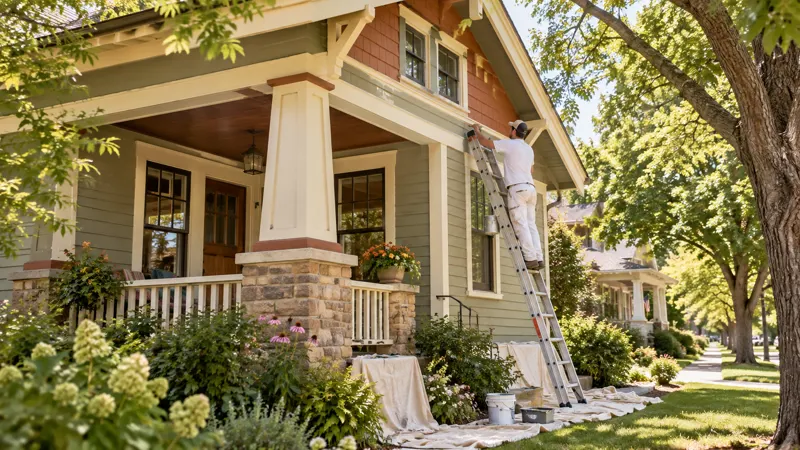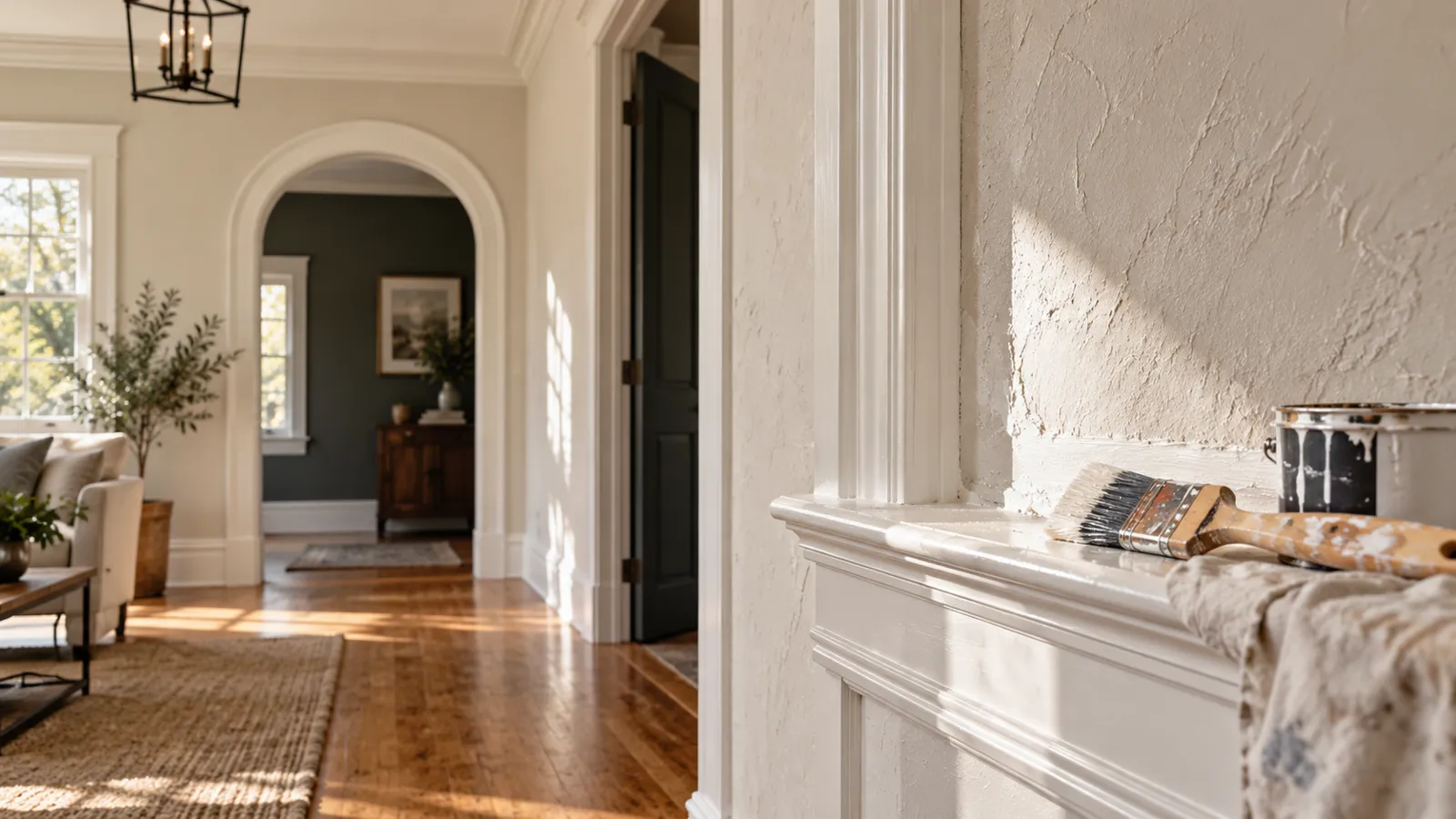
The walls in a Littleton house might be sixty years old. In the bungalows near Main Street they're plaster over lath; in the mid-century ranches they're the first generation of drywall, often with a hand-applied texture; in Ken Caryl and Southbridge they're '70s and '80s drywall with a heavy knockdown or, on the ceilings, popcorn. Painting an interior like that is a different craft than rolling a new build, and most of what makes the result look right happens before the color goes on. Here's how we approach interior painting in Littleton's older homes, and what's worth keeping.
Plaster is not drywall
Plaster walls are hard, cold and slightly uneven, and they crack. Hairline cracks along old lath lines, diagonal cracks off the corners of doors, and the occasional spot where the plaster has separated from the lath and sounds hollow when you tap it. Painting over those cracks buys a few months. Fixing them means opening the crack, re-adhering loose plaster where it's let go, patching with the right compound, and skimming rough areas so the surface reads flat under paint. Where a wall is too far gone we can re-cover it in drywall and blend the edges into the surrounding plaster; our sister team at Wild Fox Drywall handles that, on one estimate and one schedule with the painting.
Then there's the paint already on it. Old plaster has often been painted in oil at some point, and latex over unprepared oil peels. We check, and we scuff and prime where we find it.
The mid-century ranch: texture, trim and small rooms
Littleton's '50s and '60s ranches have three things going on. The walls carry the first generation of drywall texture, frequently a hand-troweled or sprayed pattern that doesn't match modern knockdown, so any repair has to be rebuilt to match rather than patched flat. The trim is usually original, sometimes fir or mahogany, and worth a hard look before anyone paints it. And the rooms are smaller with smaller windows than anything built since, so color reads darker and truer than it does in an open-plan great room.
For the texture, matte on the walls is the answer; it evens out the pattern and the old repairs. For the trim, our honest advice is that original stained fir or mahogany in good condition is worth keeping and painting around, with warm whites and mushroom tones that flatter it; '70s and '80s oak, on the other hand, paints beautifully with a bonding primer and a durable enamel and most owners prefer it white. For the rooms, go a shade lighter than you would in a big sunny space, and test on the wall.
Ken Caryl and Southbridge: the popcorn era
The '70s and '80s homes have the heaviest textures in town and, on most ceilings, popcorn. Painting a popcorn ceiling is possible; removing it is the update. Wild Fox Drywall contains the room, scrapes it, repairs what's underneath and refinishes it smooth or in a light texture, then we paint it. Two specialty teams, one coordinated handoff: one estimate, one schedule, one point of contact. Once the ceiling is done, the rest of the repaint reads as new instead of touched up.
These homes also have thirty years of patches in the walls and a color scheme from whichever decade last repainted them. The move is usually off tan and cream to a current warm white or greige, matte on the walls, satin in the kitchen, baths and hallways, semi-gloss on trim and doors. We don't apply anything glossier than semi-gloss on a home interior; on walls this age the higher sheens show every repair.
Littleton Village and the newer pockets
For contrast, the newer builds in Littleton Village and the infill homes near downtown are on a single coat of builder flat that scuffs and can't be wiped. There the first repaint is about choosing a palette for the whole connected space and doing it in two proper coats before the furniture is in. It's the easiest interior we do in town, and the fastest.
Light in older Littleton rooms
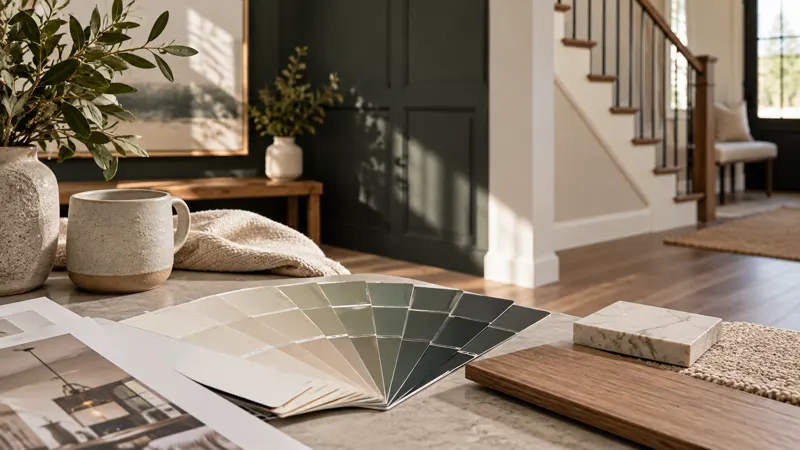
The older the house, the smaller the windows, and the more the room's color depends on where those windows face and what bulbs you run at night. South-facing rooms warm and brighten a color; north-facing rooms cool and dim it; hallways, baths and basements are bulb light. On an older house it's worth checking the bulb temperature before picking paint, because a warm bulb over a cool gray is how a hallway ends up looking green. We bring fan decks and put test colors on the wall in the room that's getting painted.
What every Littleton interior gets
Patching and sanding done to match the existing surface, repairs primed so they don't flash through, clean cut lines at the ceiling and trim, and two coats of a low- or zero-VOC Sherwin-Williams or Benjamin Moore line so the room is usable that evening. Doors come off, get sprayed at our shop a few minutes away, and go back on. When the last wall is done we walk every room with you and touch up on the spot.
Frequently asked questions
Can you paint plaster walls without the cracks coming back? Yes, if the cracks are repaired rather than painted over: opened, re-adhered where the plaster is loose, patched, skimmed and primed. Cracks that get a swipe of caulk and a coat of paint come back by spring.
Should I paint the original wood trim in my mid-century Littleton home? If it's stained fir or mahogany in good shape, we'd usually say keep it and pick wall colors that flatter it. If it's '70s or '80s oak, painting it white with proper prep is the change most owners are happiest with.
What's the best finish for old textured walls? Matte. It evens out hand-applied texture and decades of patches. Satin for kitchens, baths and hallways; semi-gloss for trim and doors.
Do you remove popcorn ceilings? Our sister team at Wild Fox Drywall does the removal and refinishing and we paint the result, on one estimate and one schedule.
Is there lead paint inside older Littleton homes? On homes built before 1978 there may be, usually on trim and windows. We follow lead-safe practices when we sand or scrape old paint in those homes.
How long does an interior repaint take in an older house? A little longer than a new build because of the repair work: one to two days for a room, five to six days for a whole floor with plaster or texture repairs. The estimate gives you the real timeline.
Older walls, done properly
If your Littleton house has plaster cracks, texture patches, a popcorn ceiling, or a color scheme from three owners ago, a free estimate is the place to start. We're minutes away. We'll look at what the walls actually need, give you an honest read on the trim, and put a written plan together with the finish and product named for every surface.