Most people call about exterior painting because the house looks tired. Fair enough. But the color is the least valuable thing a Castle Rock exterior repaint does. The paint film on your siding, stucco and trim is the only thing between Colorado weather and the materials underneath, and on the Front Range that film has a harder job than almost anywhere in the country. Here's what a proper exterior repaint is actually worth in Castle Rock, what breaks paint here, and how to tell a job that will last from one that won't.
The paint is the weather barrier, not the decoration
Castle Rock sits at about 6,200 feet. Ultraviolet light gets stronger with elevation, and the town gets more than 240 sunny days a year, so the south- and west-facing sides of a house here take a beating that a home in a lower, cloudier climate never sees. UV breaks down the resin in paint, the surface chalks, the pigment fades, and the film thins until it stops shedding water.
Then the seasons do the rest. Spring and fall swing 40 degrees in a day. Water works into hairline cracks in the film, freezes overnight, expands, and opens the crack wider. Repeat that a few hundred times over a couple of winters and you have peeling paint, then bare wood, then soft wood. Add the wind that comes across the Palmer Divide and the hail that arrives most summers, and a Castle Rock exterior is being tested constantly.
When the paint fails, the material behind it starts paying: swollen trim, split fascia, water behind the stucco, rusting nail heads. Those are carpentry and stucco bills, and they cost multiples of a repaint. A sound paint film is the cheapest maintenance on the house, and the one most people leave too long.
What it does for the home's value
Real estate pros will tell you exterior paint is one of the few improvements that pays for itself at resale, and the annual cost-versus-value surveys of remodeling projects consistently put exterior refreshes near the top of the list for return. The reason is simple: buyers price the outside of a house before they have parked. In Castle Rock's newer neighborhoods, where the house next door was built by the same builder in the same decade, a faded, chalky exterior next to a crisp one reads as deferred maintenance, and buyers assume the rest of the house has been treated the same way.
You don't have to be selling to collect the value. A repaint that catches the failing spots before water gets in extends the life of siding, trim and stucco by years, and that's money you never have to spend.
What we see across Castle Rock
Every subdivision here was built in a different decade by a different builder, and it shows in what the exterior needs.
- Founders Village and Plum Creek are late-'90s homes, so most are past the ten-year mark on their first or second repaint. Lap siding and wood trim are the norm, and the trim is usually where the paint has let go first.
- The Meadows was built out in phases from the early 2000s. The first phases are at the age where the original builder-grade finish chalks on the sun-facing sides while the north side still looks fine. The HOA reviews exterior colors before work starts.
- Crystal Valley, Terrain and Cobblestone Ranch are newer, with more stucco and fiber-cement siding. These are mostly first repaints, and the common surprise is how much the south elevation has faded relative to the rest.
- Castlewood Ranch, Sapphire Pointe and the custom homes toward Bell Mountain Ranch mix materials on one house: stucco fields, heavy timber accents, stone, wood trim. Each gets its own prep and product.
One thing that's true almost everywhere in town: the south and west walls need repainting years before the north and east ones do. We often recommend prioritizing the sun-facing elevations if the budget won't cover the whole house at once.
The right product for each surface
A Castle Rock house is rarely one material. Here's how we treat what we find.
| Surface | What it needs | What we use |
|---|---|---|
| Lap and fiber-cement siding | Wash, scrape and sand failing paint, prime bare spots, caulk the joints | UV-rated acrylic, two coats |
| Stucco | Clean, patch open cracks with an elastomeric filler, let it breathe | Masonry-rated acrylic or elastomeric coating |
| Wood trim, fascia and soffits | Sand weathered wood back to sound material, prime, caulk, finish | Bonding primer plus a durable acrylic trim enamel |
| Brick and stone | Only paint or limewash when the look calls for it; never trap moisture | Masonry primer and a breathable topcoat |
| Front and garage doors | Degloss, prime as needed, finish in a color that holds | Sherwin-Williams Emerald Urethane or a comparable enamel |
| Decks, fences and railings | Pressure wash, sand or brighten weathered wood | Penetrating stain, or paint on metal railings |
We work primarily with Sherwin-Williams and Benjamin Moore exterior lines, and the estimate names the exact product for every surface on your house. The warranty follows the product: better paint holds a finish longer, so our materials warranty runs up to 14 years depending on what goes on the wall, on top of a 100% workmanship guarantee.
What separates a job that lasts from one that doesn't
It isn't the brand of paint. It's everything that happens before the first coat.
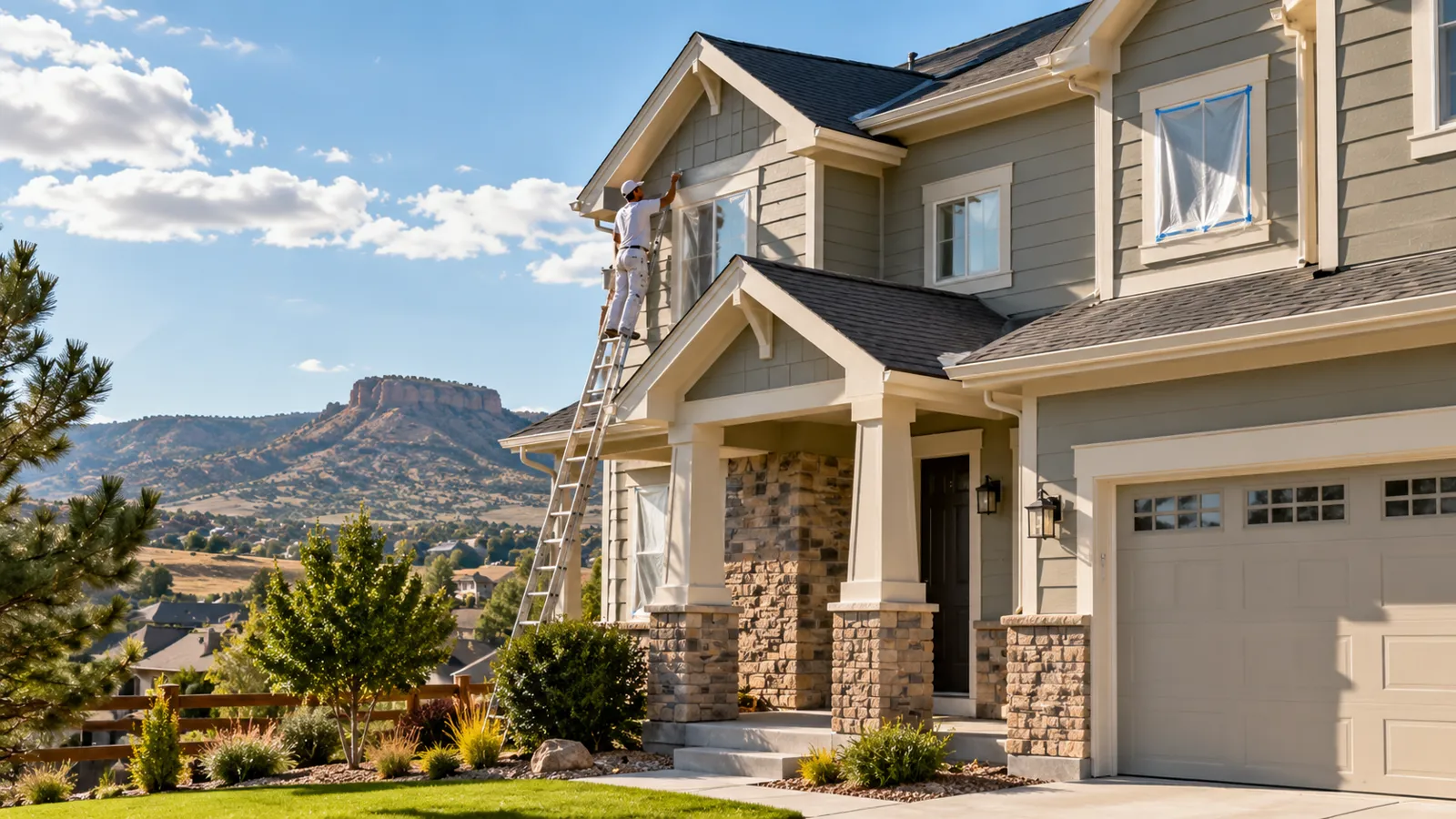
- Wash. Chalk, dust and mildew come off first. Paint over chalk and the new coat is bonded to powder.
- Scrape and sand. Failing paint is taken back to a sound edge, then feathered so the repair doesn't telegraph through.
- Prime the bare spots. Bare wood and patched stucco need primer or the topcoat soaks in unevenly and fails early there.
- Caulk. Open joints at trim, windows and siding butts are where water gets in. They get re-caulked, not painted over.
- Two coats. One thick coat is not two thin ones. Two coats build the film thickness that survives the sun.
- Watch the weather. Exterior paint needs the surface above 50°F and a dry window after application. We reschedule rather than paint into a storm.
Skipping any of those saves a day and costs years. It's also why a cheap exterior bid is usually cheap: the prep is what got cut.
Timing an exterior repaint in Castle Rock
The painting window here runs from late spring through early fall. Modern acrylics will cure at lower temperatures than the old rules of thumb, but nights below 50°F and afternoon storms both shorten the day, so May through September is when most of the work happens. Good painters book that window early. If your south wall is chalking now, get on a schedule before the season fills.
Two Castle Rock specifics worth planning for:
- HOA color approval. The Meadows, Terrain, Crystal Valley and many other communities review exterior colors before work begins. We supply the product and color specs for your submission and schedule the job around the approval, so it never holds up the painting window.
- Hail. If your area took a hailstorm, have the siding and trim looked at before it's painted. Paint over a dented or split board and you've hidden a problem, not solved it.
Choosing the painter
Any company can put paint on a wall. What you're buying is the prep and the accountability afterward. Ask for a written, itemized estimate that names the products by line. Ask what the prep includes and whether bare spots get primed. Ask whether the company is insured and what the warranty says in writing. Then read the reviews with an eye for whether the crew showed up when they said they would and cleaned up.
We're based in Littleton and Castle Rock is where our crews spend more of their time than anywhere else. That means we know which subdivisions have which siding, which HOAs are strict about color, and which elevations fail first, and it means we're close for the walk-through and for anything that comes up after.
Frequently asked questions
How often does a Castle Rock exterior need repainting? Most homes here get 7 to 10 years from a properly prepped repaint with a quality acrylic, less on the sun-facing sides and on wood trim, more on stucco and on shaded elevations. Builder-grade paint on a new home often needs attention at 5 to 7 years.
Which sides of the house fail first? South and west. They get the afternoon sun and most of the UV. If the whole house isn't in the budget, do those elevations first.
Do I need HOA approval to repaint? In most Castle Rock subdivisions, yes, if the color changes. Repainting in the existing approved color often doesn't need a submission, but check. We'll give you the specs either way.
Can you paint stucco, brick or fiber cement? Yes. Each gets a different prep and a different coating. Stucco gets a breathable masonry coating, brick gets a masonry primer and is only painted when you want that look, and fiber cement takes a standard acrylic over sound prep.
How long does an exterior repaint take? Typically three to five working days for a single-family home, depending on size, the amount of prep, and the weather. You'll get a specific timeline in the estimate.
What's the best time of year? Late spring through early fall. Book early; the season fills.
Ready to protect the house, not just recolor it?
If your Castle Rock exterior is chalking, fading on the south side, or showing bare wood at the trim, the cheapest time to fix it is now, before the water gets in. Request a free estimate and we'll walk the house, name the products for every surface, and give you a written plan with the warranty spelled out.