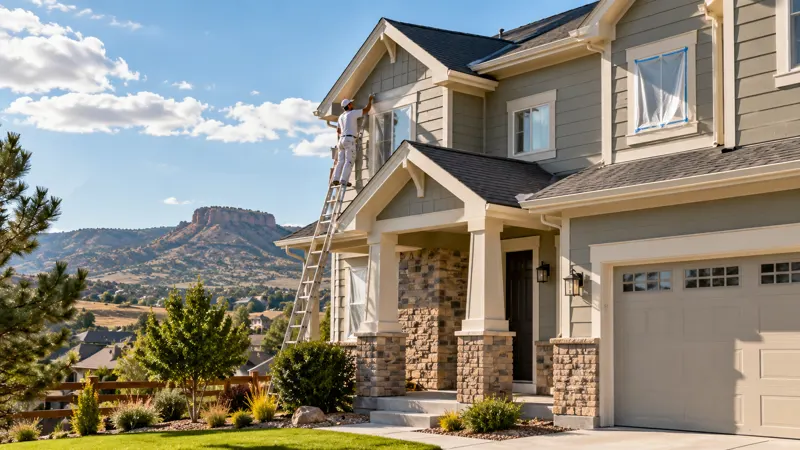
Nobody in Highlands Ranch is painting a house for the first time. The community was built out between the early '80s and the early 2000s, so the original builder coat is long gone and every exterior here is on its second, third or fourth repaint. That changes the question. On a new house you're buying protection for fresh wood. On a 30-year-old house you're buying a correction: the new paint has to make up for whatever the last one skipped, and it has to do it on materials that have already been through a few decades of sun, snow and hail. That's where the real value of an exterior repaint in Highlands Ranch sits, and it's worth understanding before you compare bids.
Why the last repaint decides how long the next one lasts
Exterior paint fails from the bottom up. When a coat goes on over chalk, dust or unprimed bare wood, it bonds to the weak layer instead of the house, and it starts letting go on the sunny side within a few seasons. Walk any street in Eastridge or Westridge and you can see it: two homes from the same builder, painted the same year, one still crisp and one peeling at the trim. The difference is almost never the paint brand. It's whether someone washed the chalk off and primed the bare spots before the color went on.
That's why the first thing we do on a Highlands Ranch estimate isn't picking a color. It's checking what the existing coat is bonded to. Rub a hand along a south-facing wall: if it comes back white with chalk, the old film has broken down and the new paint has to go over a properly washed, sound surface or it will fail the same way.
The cost of waiting on a 30-year-old house
On an older home the paint isn't protecting new wood. It's protecting wood that has already dried, checked and moved for three decades, and once the film opens up, the material behind it deteriorates fast. Fascia boards split at the ends. Window trim swells and the miters open. Sill boards at the bottom of the siding, the first thing snow sits against, go soft. Nail heads rust and bleed through.
Each of those is a carpentry repair, and carpentry costs multiples of paint. The cheapest exterior work on a Highlands Ranch home is the repaint that gets there a year before the trim needs replacing, which is why we'd rather repaint a house at year eight than rebuild its fascia at year eleven.
What it means when you sell
Highlands Ranch has one of the most comparable housing stocks in the metro. The buyer touring your Northridge two-story has already toured three others from the same plan book. Faded, chalky paint beside a neighbor's fresh coat reads as deferred maintenance, and buyers assume the roof, the furnace and the water heater have been deferred the same way. Exterior paint stays near the top of the annual cost-versus-value surveys for exactly this reason: it changes the first impression on the one part of the house the buyer sees before they park.
You don't need to be listing to collect on it. The same repaint that would make the house show well is the one that keeps the trim from needing replacement, so the money comes back whether or not you sell.
What a repaint has to fix, ridge by ridge
The four ridges and the newer south-end neighborhoods were built by different builders in different decades, so the exteriors fail differently.
| Neighborhood | Built | What we usually find | What the repaint has to include |
|---|---|---|---|
| Northridge | Early '80s | Wood siding and trim on the third or fourth coat; earlier repairs painted over | Scraping old failures back to sound wood, replacing the worst boards |
| Eastridge, Westridge | Late '80s to '90s | Lap siding, brick or stone fronts, sun-faded front elevations | Wash, prime bare spots, re-caulk every butt joint and window |
| Southridge | Late '90s to 2000s | Stucco and fiber-cement mixes, chalking on the south side | Stucco crack repair, a breathable masonry coating where there's stucco |
| BackCountry, Firelight, Lantern Hill | 2000s and newer | Builder-grade finishes at the chalking age; larger homes | Whole-house staging over several days; premium lines the home warrants |
Two things hold across all of them. The south and west elevations fail years before the north and east, so if the budget won't stretch to the whole house, those sides and the trim go first. And nearly every exterior color change in Highlands Ranch goes through the community association's design review, sometimes a sub-association's too, so the color submission goes in at the same time the estimate does.
The prep that makes an older exterior last
On a house that's been painted before, the preparation is most of the labor and nearly all of the value. It runs in this order.
Wash the chalk off. Pressure washing takes the powdered, broken-down paint and the mildew off the surface. Skip it and the new coat bonds to dust.
Scrape and sand to a sound edge. Every place the old paint has lifted gets taken back to where it's still holding, then feathered so the step doesn't telegraph through the new finish. On '80s wood siding this is where the hours go, and it's the line a cheap bid quietly leaves out.
Replace what's rotten. Soft fascia, split trim and sill boards come out and new material goes in. Painting over them buys a season and hides the problem from the next buyer's inspector, which is worse than leaving it visible.
Prime bare wood and repairs. Raw wood and patched stucco drink topcoat unevenly and fail early right there. Primer evens it out and gives the color something to hold.
Re-caulk the joints. Trim, window frames and siding butts open up as the house moves. Old caulk gets cut out and replaced, not painted over.
Two coats, in the window. Two thin coats build the film that survives the sun; one heavy coat sags and cures unevenly. Surfaces need to be above 50 degrees with a dry stretch after, which in Highlands Ranch means late spring through early fall.
We work primarily in Sherwin-Williams and Benjamin Moore exterior lines, and the estimate names the product for each surface. The materials warranty runs with the product, up to 14 years, and sits on top of a 100% workmanship guarantee, which matters more on an older house where the workmanship is the whole story.
Getting the timing right
The painting season here runs roughly May through September, and it fills. If the south wall is chalking now, get an estimate before the season books out and send the color submission to the association in the same week, so the approval and the schedule line up instead of one waiting on the other. If your neighborhood took hail, have the siding and trim inspected before anyone paints; a dented board that gets painted is a repair that got hidden.
What to ask a painter about an older home
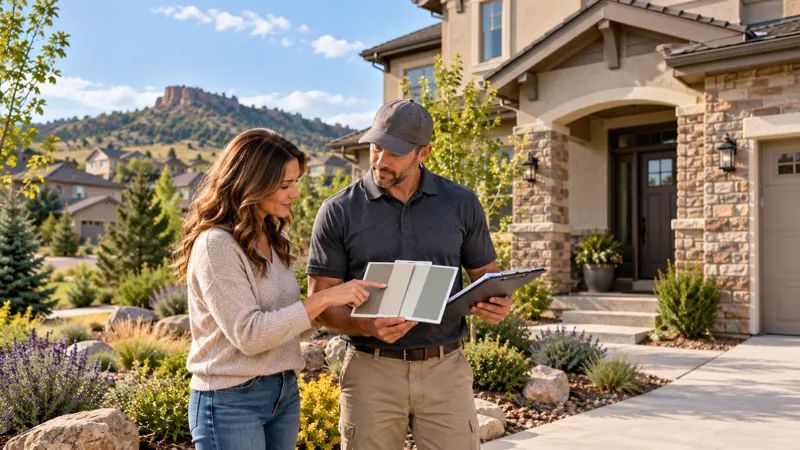
The questions are different for a house that's been painted before. Ask what happens to the areas where the old paint has failed: scraped and primed, or painted over? Ask whether bare wood gets primer. Ask what the crew does when they find rot, and whether carpentry is priced in or added later. Ask for an itemized estimate that names the products by line, proof of insurance, and the warranty terms in writing. Then read the reviews for whether the crew showed up on the days they said and left the yard clean.
Our shop is in Littleton, next door, and the four ridges are streets we're on every week. We know which decades used which siding, which associations are strict about color, and which elevation on a given plan fails first, and we're close for the walk-through and for anything that comes up after.
Frequently asked questions
My house has been painted twice already. Does that change the job? Yes. Each coat is only as sound as the one under it, so the failing layers have to come off to a sound edge before the new paint goes on. On an older Highlands Ranch home that prep is the majority of the work and the reason the result lasts.
How do I know if the old paint has failed? Run a hand along a sunny wall. Chalk on your palm means the film has broken down. Peeling at the trim, open caulk at the windows, and paint that flakes when you press a thumbnail into it all mean the same thing.
Do the brick and stone fronts get painted? Usually not. Most owners leave masonry alone and repaint the trim and siding around it. If you want the brick painted, it takes a masonry primer and a breathable topcoat so moisture isn't trapped behind the finish.
Is HOA approval required? For a color change in most Highlands Ranch neighborhoods, yes, and some sub-associations review even a like-for-like repaint. We supply the product and color specs for the submission.
What if the crew finds rotten wood? It gets replaced before painting. We tell you what we found, what it costs, and why painting over it isn't an option.
How long will the new paint last? On properly prepped siding with a quality acrylic, seven to ten years, less on sun-facing sides and wood trim, more on stucco and shaded walls. Done right, the next repaint is a maintenance job rather than a rescue.
The house has been painted before. Paint it right this time.
If your Highlands Ranch exterior is chalking, peeling at the trim, or simply on a coat you don't trust, a free estimate is the place to start. We'll walk the house, tell you what the last repaint got right and wrong, name the products for every surface, and put the warranty in writing.