Short answer: yes, always repair drywall before painting. Paint is not a filler. It's a finish — and finishes reveal what's underneath far more than bare drywall does. If you skip the repair step, you'll spend money on paint and still see every flaw.
Here's what's actually happening, and why it matters for your project.
Paint Magnifies Flaws, It Doesn't Mask Them
This is the thing most homeowners don't expect until they see it. A dent or bad patch that looks minor on bare drywall becomes obvious under paint, especially once the room has furniture and lamps throwing light at angles across the wall.
That angled light — called raking light — is brutal on wall texture. It throws shadows across even small surface irregularities. A poorly feathered patch edge that was invisible in overhead light will show as a ridge once a floor lamp is in the corner.
Sheen makes it worse. Flat paint is forgiving. The moment you move to eggshell — which most people want in living rooms and bedrooms because it wipes clean — the surface becomes slightly reflective. That reflection amplifies texture differences between patched and unpatched areas. Semi-gloss on trim or a bathroom wall is even more unforgiving.
So the sequence matters: repair first, paint second. Reversing that order wastes both.
What "Repaired" Actually Means
Not all drywall repairs are equal, and this is where a lot of DIY fixes fall short.
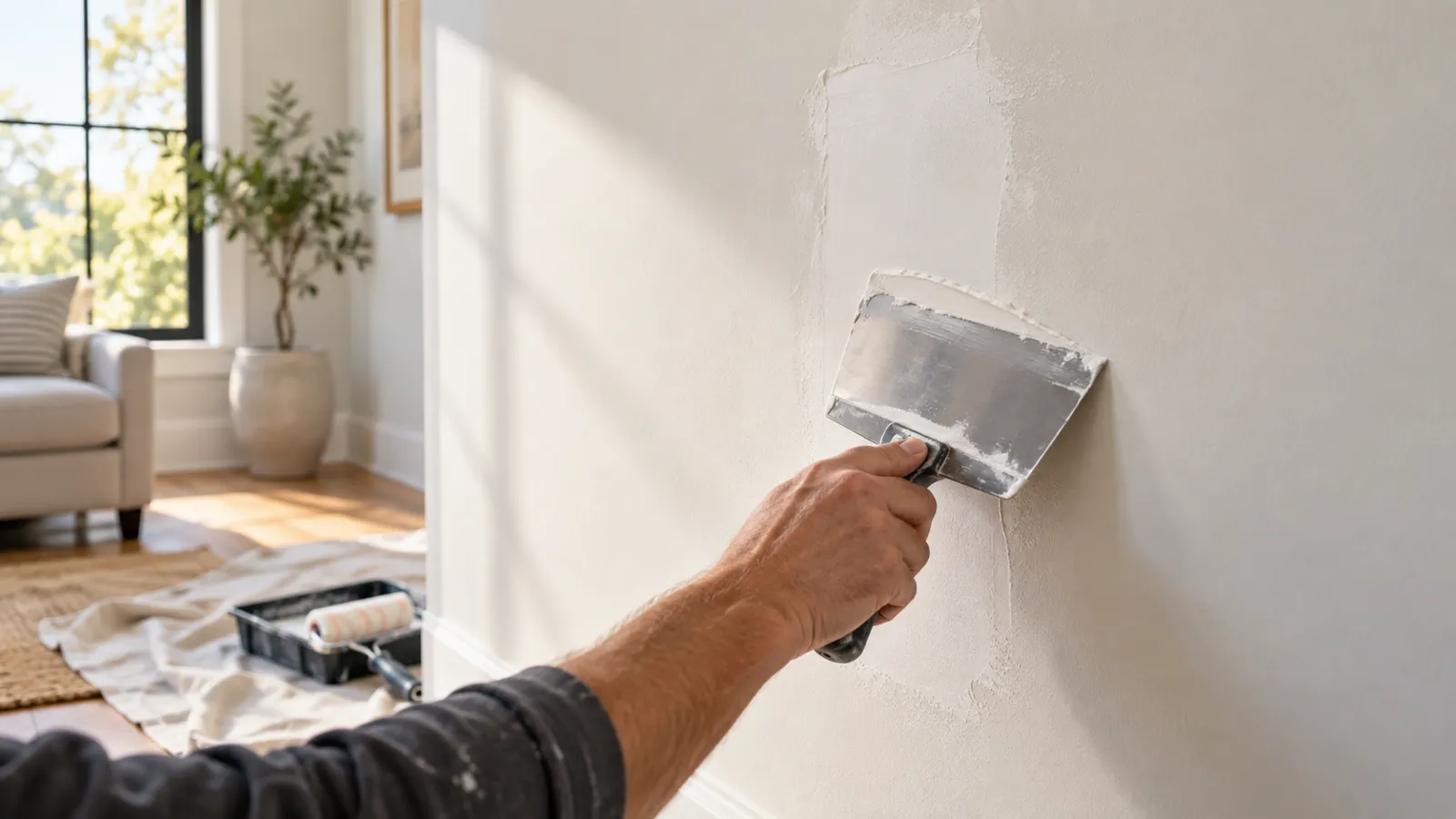
A good repair isn't just filling a hole. It means:
- Feathering compound edges so there's no hard ridge where the patch meets the original drywall
- Matching the existing texture — orange peel, knockdown, skip trowel, or smooth — so the patched area doesn't look like a different wall
- Priming the repair before paint goes on, because unprimed compound absorbs paint differently than the surrounding surface and will flash (look dull or shiny in patches) even under a good topcoat
Texture matching is a skill. Knockdown texture in particular is easy to get wrong — the splatter size, the flatten timing, the overlap pattern all affect whether it blends or stands out. A repair that looks fine before painting can become a visible ghost patch afterward.
Why We Don't Patch Drywall Ourselves — And Why That's Actually Better for You
Some painting companies will do minor drywall touch-ups as part of prep. We're transparent about the difference between a nail-pop or small ding versus actual drywall repair.
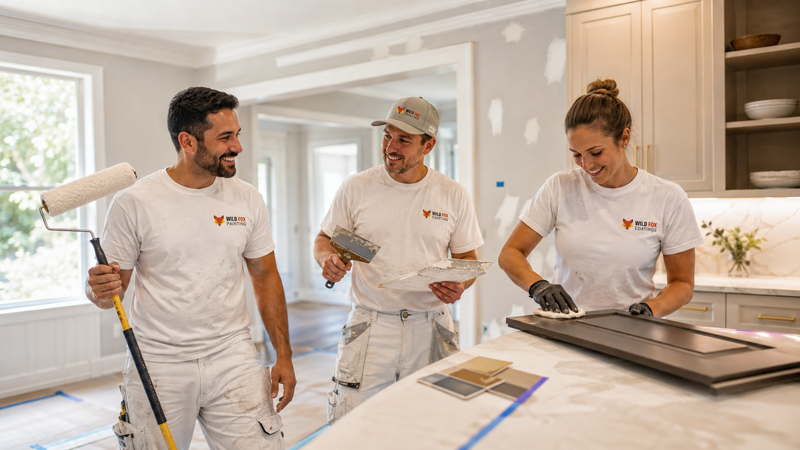
For real repairs — significant holes, water damage, texture matching across larger areas, cracks from settling — we work directly with our sister company, Wild Fox Drywall. They specialize in exactly this: repair, skim coats, and texture matching. That's their trade. Sending that work to a specialty crew means the repair is done correctly, not just adequately.
The coordination piece is what makes this work for you as a homeowner. You don't manage two separate schedules or explain your project twice. One estimate covers the scope, one schedule sequences the trades in the right order, and you have one point of contact throughout. The drywall work gets done and inspected, then our painting team takes over for primer and finish coats.
For interior painting projects — where raking light from windows and lamps is a constant factor — this handoff makes a measurable difference in the final result.
Common Situations That Need Repair Before Paint
If you're looking at your walls trying to decide what actually needs attention before your project, here are the things worth flagging:
- Nail pops — the nail head pushes through the surface as the framing dries; needs to be reset and patched, not just painted over
- Tape seams showing — usually a sign of old tape lifting or original finishing that wasn't deep enough; painting over it makes it worse
- Cracks at corners or around windows and doors — often from normal house settling; small cracks grow under paint because the movement continues
- Water stains or soft spots — stains need to be sealed with the right primer or they bleed through any paint; soft spots mean the drywall may need replacement, not just patching
- Texture mismatches from previous repairs — if someone patched a hole before and left it smooth on a textured wall, that will show
When you request an estimate, we'll flag anything we see during the walkthrough that should be addressed before paint goes on. If it's minor prep, we handle it. If it's real drywall work, we'll bring in Wild Fox Drywall and coordinate from there.
The Bottom Line
Paint is a finish coat, not a skim coat. Skipping drywall repair to save time or money tends to produce a result that looks rushed — and because paint locks in what's underneath, fixing it afterward means stripping back and starting over.
Doing it in the right order isn't extra work. It's just the work done correctly.
If you have a room — or a whole house — that needs both repairs and fresh paint, we can walk through the full scope with you and coordinate both trades under one estimate. Request your free estimate and we'll take a look at what you're working with.