The Replace-vs.-Paint Math Is Pretty Simple
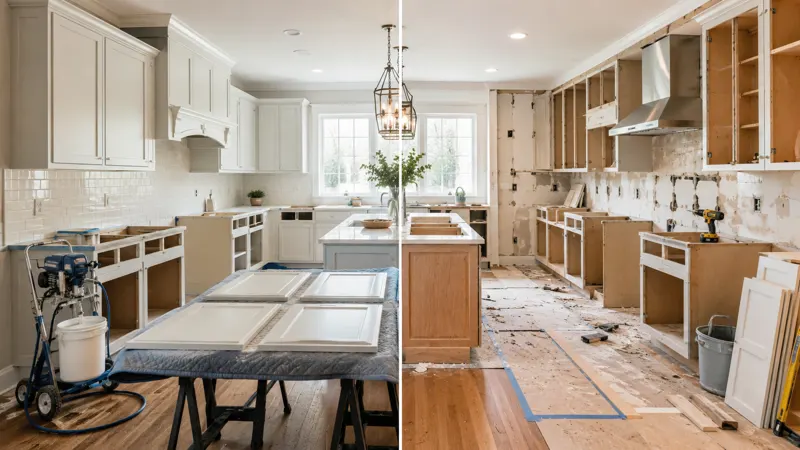
New kitchen cabinets run $15,000 to $40,000 or more once you factor in boxes, doors, hardware, installation, and the near-certain drywall repair that follows demolition. Cabinet painting delivers a comparable visual result for a fraction of that — same layout, same storage, dramatically different look.
But "a fraction" still spans a wide range. Understanding what drives the number helps you evaluate any quote you receive, including ours.
Factor 1: Door and Drawer Count
This is the biggest single variable. A modest galley kitchen with 20 doors and 6 drawer fronts is a fundamentally different project than an open-concept kitchen with 40 doors, glass inserts, and deep pull-out drawers.
Each surface has to be removed, cleaned, sanded, primed, painted, and re-hung. More pieces means more labor hours — full stop. When you see a quote that seems suspiciously low, the first question to ask is whether the painter actually counted your doors and drawers or just eyeballed the room.
Factor 2: Current Condition and Prep Requirements
Prep is where cheap jobs cut corners, and it's where quality is won or lost.
Cabinets in a working kitchen accumulate grease, cooking oils, and cleaning product residue. That film has to be fully removed before any coating goes on — if it isn't, paint adhesion fails within months. Proper cleaning often takes longer than painters expect, especially on surfaces near the range.
Beyond cleaning, condition affects prep time in other ways:
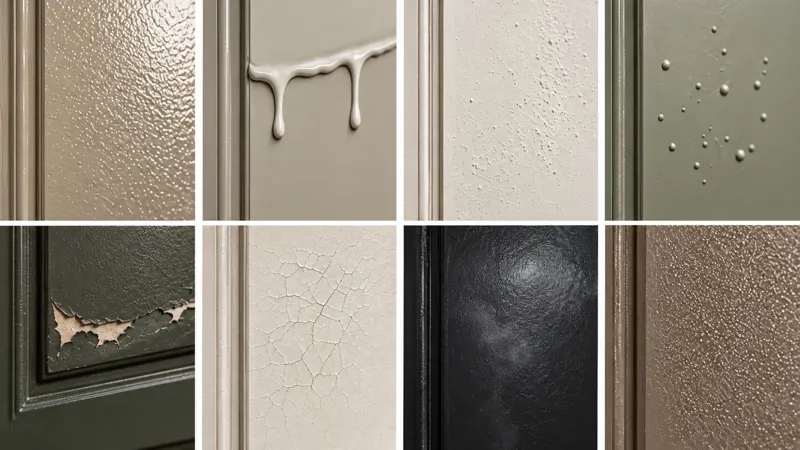
- Existing finish type. Thermofoil, laminate, or heavily lacquered surfaces each require specific prep approaches. Painting over the wrong substrate without proper adhesion work leads to peeling.
- Dings, dents, and grain. Raw wood grain (common on oak cabinets) telegraphs through paint if it isn't filled and sanded down. Getting a smooth, furniture-grade result on grain-heavy wood takes extra passes.
- Previous paint or stain. Old peeling paint means stripping or heavy sanding before you can build a clean foundation.
A thorough prep phase isn't padding on a quote — it's the entire reason a finish lasts.
Factor 3: Finish and Product Selection
Not all cabinet paints are equal, and the product choice affects both price and durability.
Cabinets take far more abuse than walls: daily touching, moisture, heat, cleaning products. They need a coating formulated for that environment — something that cures hard enough to resist scratching and scuffing without becoming brittle. Brushing wall paint on a cabinet box is a common shortcut that looks fine for six months and fails in two years.
Finish sheen matters too. Cabinet work typically uses a satin or semi-gloss sheen — durable, cleanable, and appropriately reflective without showing every imperfection. The right product costs more than a builder-grade wall paint; that cost shows up in the quote, and it's legitimate.
Factor 4: Cabinet Box Condition and Scope
Some projects involve painting only the doors and drawer fronts (the visible faces). Others include the box interiors, frames, and toe kicks. Full-scope work takes more time and materials. Be clear with any painter you're talking to about exactly what surfaces are in scope, and make sure the quote reflects that specifically.
If you're also considering repainting or refreshing the walls nearby, that's a separate scope — worth addressing at the same time to avoid staging the kitchen twice.
Factor 5: Removal, Hardware, and Re-installation
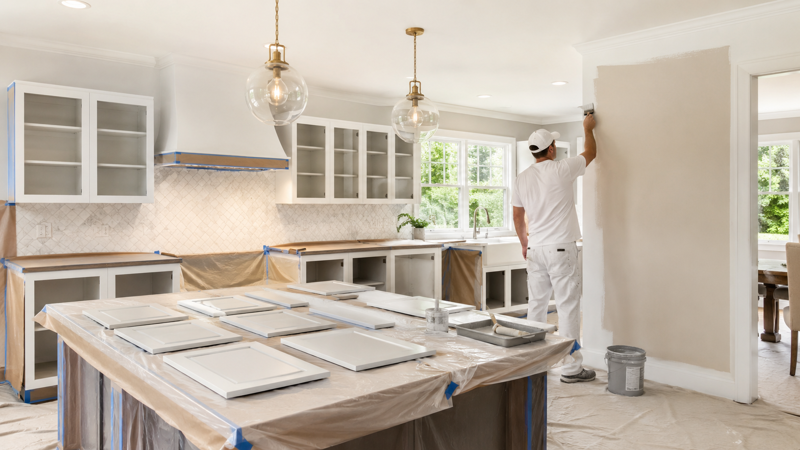
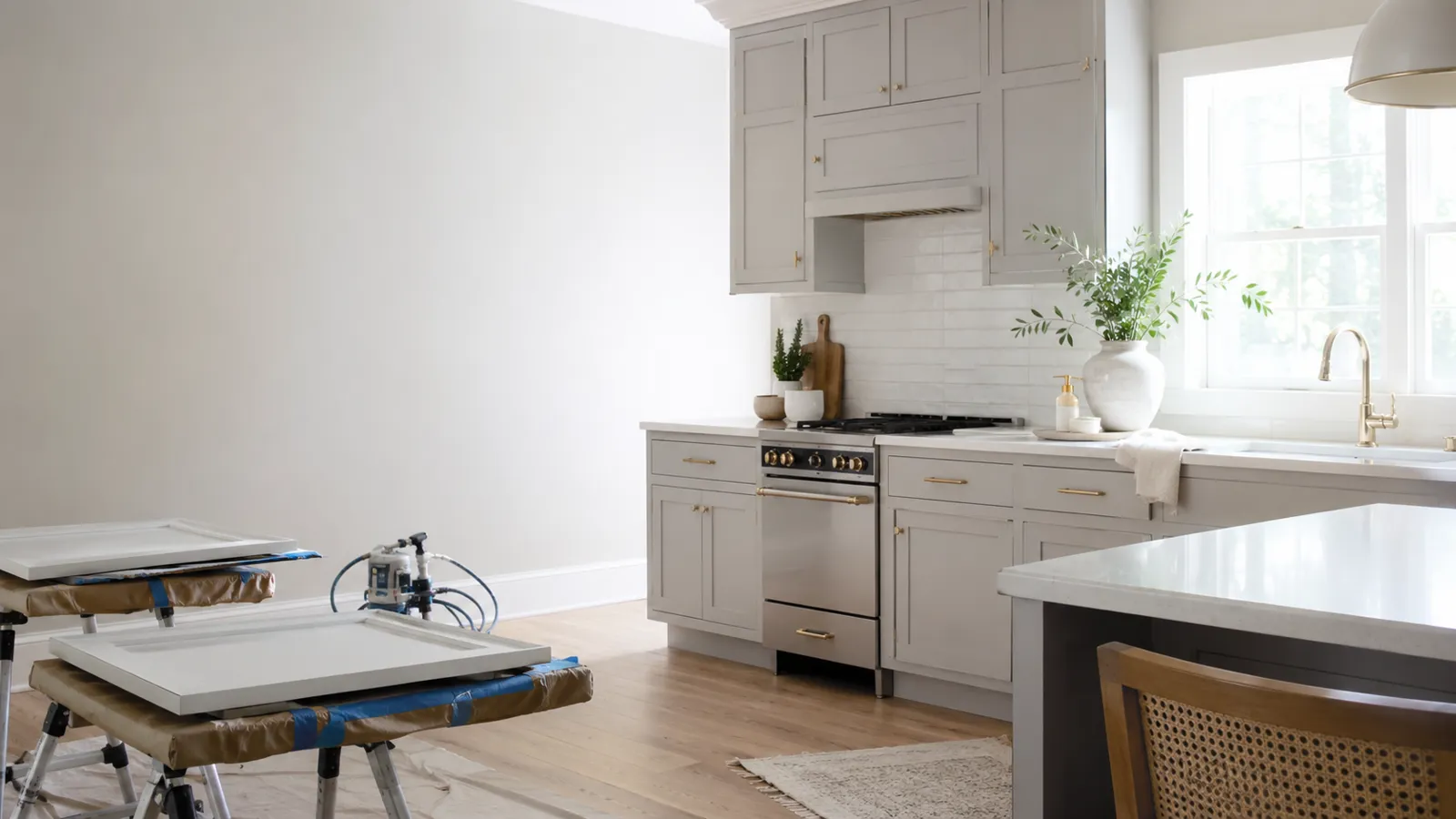
Professional cabinet painting means removing every door and drawer front, painting them flat (ideally with a sprayer for a smooth finish), and re-hanging everything level and adjusted. Painting doors in place produces visible brush marks, uneven coverage on edges, and drips at hardware holes.
The labor for careful removal and re-installation is real. Hinges should be adjusted after re-hanging — doors that don't close flush or sit crooked are a tell that the crew rushed the final step.
Where Cheap Quotes Cut Corners
If a quote comes in dramatically lower than others, it's usually one of these:
- Skipping degreasing. Fast, but the paint peels.
- Painting doors in place. Saves time, looks worse.
- One coat of a light-duty product. May look fine at walk-through; chips within a year.
- Skipping primer. Especially risky on bare wood, previously stained surfaces, or anything that was wiped down with an oil-based cleaner.
- Not filling grain or imperfections. The result looks hand-painted in the wrong way.
None of these are visible on the day of completion. They show up at month six or year two.
Getting a Real Number for Your Kitchen
Every kitchen is different — door count, condition, finish goals, and scope all move the number. The only way to get an accurate figure is a walkthrough where someone actually counts your doors, looks at your current finish, and asks what you're trying to achieve.
If you're weighing cabinet painting against replacement, that conversation is worth having before you commit to either path. The cost difference is often more dramatic than homeowners expect.
Learn more about how we approach cabinet work on our cabinet painting page, or browse the portfolio to see finished kitchens. When you're ready for an actual number, request your free estimate — no obligation, no pressure.