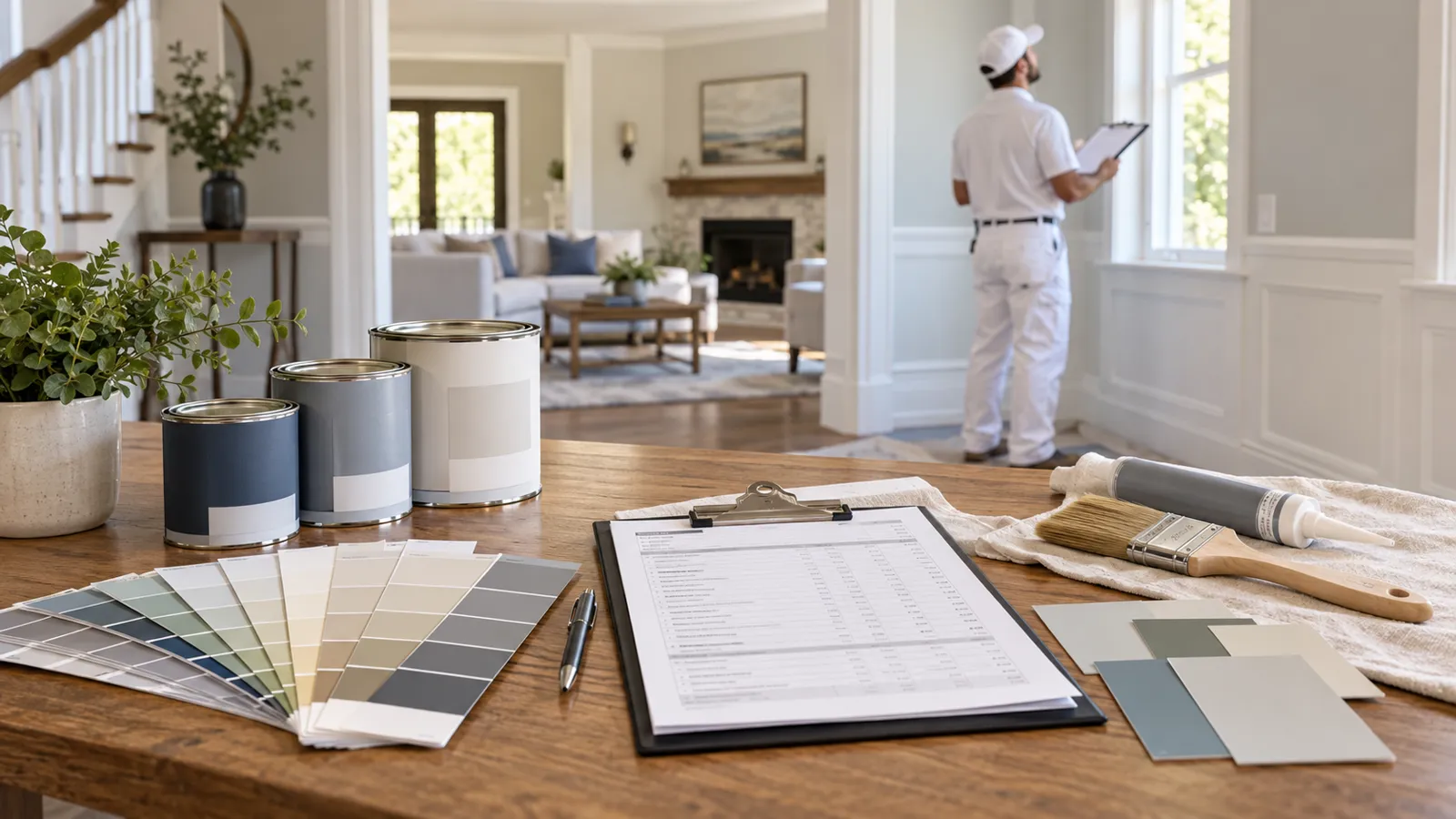
If you've collected three painting bids in the last few years, you've probably seen the format. Each one comes back as a menu: Good, Better, Best. Bronze, Silver, Gold. Standard, Premium, Elite. The names change, the structure doesn't. The top tier has the better paint and the longer warranty, and it costs somewhere between a few thousand and a lot of thousands more than the bottom one.
I run a painting company, so I know what's in the cans. This is what a tiered package usually contains, what it doesn't, and how to work out which one you're looking at.
How the tiers are usually built
Most packages move three levers between the bottom and the top:
- The paint line. Bottom tier gets the manufacturer's contractor-grade product, top tier gets the premium line. On an exterior that might be a builder-grade acrylic at the bottom and a top-shelf line at the top.
- The warranty. Two years at the bottom, five or seven or ten at the top.
- Sometimes, a coat. The top tier occasionally adds a third coat, or a primer coat the lower tiers skip.
What usually doesn't move is the thing that decides whether paint lasts: the prep. The power washing, scraping, sanding, caulking and priming of bare spots is the same work at every tier, or, worse, it's vague at every tier.
Why there are three
The format isn't an accident. Three tiers exist to make the middle one look sensible. The bottom tier is priced and described to be rejected: thin warranty, the cheapest paint, a name like "Basic" that nobody wants on their house. The top tier is priced high enough that the middle looks like the reasonable choice by comparison. Most buyers pick the middle, which is the one the bid was built around all along, and they feel like they made a careful decision. That's the point of the structure. It doesn't tell you anything about the paint or the prep. It tells you where the seller wanted you to land.
Run the arithmetic
Paint prices are public. Go to the manufacturer's website and look at the retail price per gallon of the bottom-tier product and the top-tier product in the same line. The difference is typically a few dollars to a couple of tens of dollars per gallon. Contractors buy at less than retail, so the real gap is smaller than what you see.
Now think about how much paint a job uses. A whole-house exterior on a typical Front Range two-story is in the range of ten to twenty gallons depending on size, siding and color change. An interior repaint of a few rooms is a handful of gallons. A kitchen of cabinets is a couple of gallons of primer and finish.
Multiply. The paint upgrade between tiers on most jobs is worth somewhere in the low hundreds of dollars. If the package jump is two or three thousand, the paint isn't what you're paying for. Something else is, and you're entitled to know what.
That "something else" is sometimes real: an extra coat, more prep hours, a longer warranty the company genuinely expects to honor. Sometimes it's the margin the package was designed to produce. The bid should tell you which. If it doesn't, ask.
What a longer warranty is, and isn't
A longer warranty on a higher tier is you paying up front for coverage. That isn't a trick by itself. Premium paint does last longer, and a company that stands behind twelve years on a premium line is making a real commitment. We do it ourselves.
The problem is what the warranty covers. Read the exclusions before you value the years. Most painting warranties, ours included, don't cover the things that actually take a Front Range exterior down: hail and severe weather, settling cracks as the house moves, moisture coming through from behind the film, horizontal surfaces like decks and sills that hold standing water. Colorado sun and freeze-thaw mean most exteriors want a repaint in the seven-to-ten-year range regardless of who painted them, which is worth planning for even when the coverage runs longer.
So a fifteen-year warranty that excludes weather, moisture and substrate failure is mostly a warranty on the painter's workmanship, which is exactly what the bottom tier should already carry. Compare the exclusion lists across tiers. If they're identical, the years are what you bought.
The tier that matters is the one they don't show you
Here's the thing the package format hides. Paint fails for three reasons: it went on over dirt, chalk or gloss it couldn't grip; it went on over bare wood or metal that wasn't primed; or it went on over a surface that moves or gets wet. Premium paint fails over bad prep almost as fast as cheap paint does. Contractor-grade paint over meticulous prep lasts a surprisingly long time.
That means the real tiers on a painting job are prep tiers. And prep is exactly what a Good-Better-Best menu doesn't itemize, because prep is labor, labor is what costs the contractor money, and it's much easier to sell a paint upgrade than an extra day of scraping.
Ask every bidder the same question: what prep is included, and is it the same at every tier? If the answer is a list you can check on the day, you're in good hands at any tier. If the answer is "full prep" with nothing behind it, the package price is the only thing that's specific.
How we write a bid instead
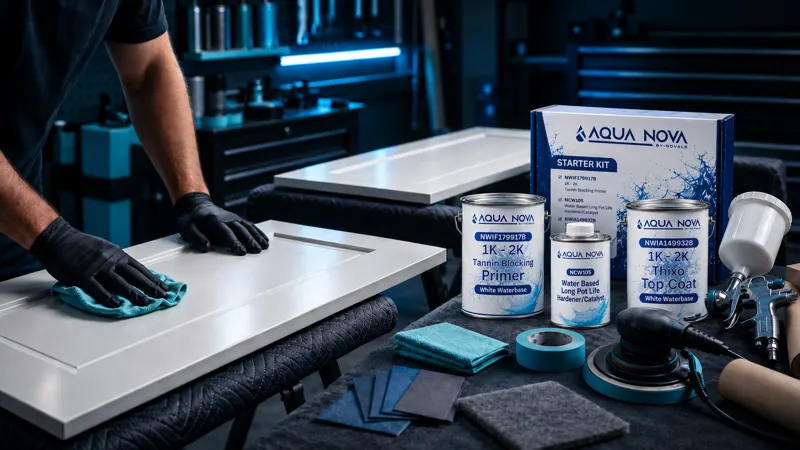
We don't sell packages. Every Wild Fox estimate has one prep spec for each kind of work, and it doesn't change with the price. Exteriors: wash, scrape and sand the failing areas, caulk the gaps, spot-prime bare and chalky spots as needed, two coats. Interiors: patch and sand, caulk the trim, prime stains and bare spots, two coats on walls and trim. Cabinets: doors and drawer fronts come to our shop, everything is cleaned, sanded and cleaned again, then two coats of primer and two coats of finish, sprayed. The itemized estimate says what's included so you can walk the job and see it done.
You do choose the paint, and the paint sets two things: the price difference, at what that product actually costs, and the warranty length. Ours runs from five years on Sherwin-Williams SuperPaint to fourteen on Emerald Rain Refresh. Unless you ask for something else, exteriors go on in Duration at nine years, interior trim and doors in Emerald Urethane at ten, and cabinets in Novalk, a two-part finish made for cabinets, at ten. If you prefer Benjamin Moore, Regal carries the same term as Duration and Advance the same as Emerald Urethane. Those years are published on our warranty page, exclusions included, before you sign anything. The workmanship guarantee underneath is the same at every level, because the work is the same at every level.
That's the whole difference. A package charges you a tier price for a paint upgrade worth a fraction of it. An itemized bid charges you for the paint and the prep, and tells you which is which.
Two questions for any bid
- What prep is included, line by line, and does it change between tiers?
- What product and sheen goes on each surface, and what does the warranty exclude?
A bid that answers both in writing is one you can compare on the merits. A bid that answers with a package name is asking you to trust the name.
If you're collecting quotes and want one that reads the way this article says it should, ours comes as a written, itemized estimate within 24 hours of the walk-through.